
TPT Exclusive Seller changes are coming January 1, 2027, and they could have a major impact on sellers who also offer educational digital products on Etsy. Teachers Pay Teachers (TPT) is discontinuing its Premium Seller membership and replacing it with the new Exclusive Seller membership. And “exclusive” means exactly what it sounds like.
Sellers who choose the higher-paying Exclusive membership will agree to sell their eligible digital educational resources exclusively through TPT. That immediately creates a pretty big question for sellers who currently use Etsy, their own website, or another marketplace. Do you have to stop selling your educational digital products elsewhere to keep the higher TPT payout? Unfortunately, this isn’t one of those “read the fine print and discover it isn’t as bad as it sounds” situations. The word exclusive is doing quite a bit of work here.
In many cases, yes. But that doesn’t necessarily mean you have to close your Etsy shop entirely. Here’s what TPT has confirmed so far, what changes on January 1st, and what Etsy sellers should be thinking about before making any rushed decisions.
Last updated: October 2, 2026. TPT has scheduled a Town Hall for October 8 to discuss the new Exclusive Seller program. I’ll be watching for additional details and clarifications as TPT releases them. I’m watching this unfold as someone who doesn’t sell on TPT, so I expect to learn quite a bit, especially during the October 8 Town Hall. I’ll update as TPT clarifies the details.
What Is Changing With TPT Seller Memberships?
Until now, TPT sellers could choose between its Basic Seller and Premium Seller memberships. TPT announced on October 1st that the Premium Seller membership is being retired and replaced by a new Exclusive Seller membership. New Premium memberships are no longer available. Beginning January 1, 2027, the two primary seller options will be Basic Seller and Exclusive Seller.
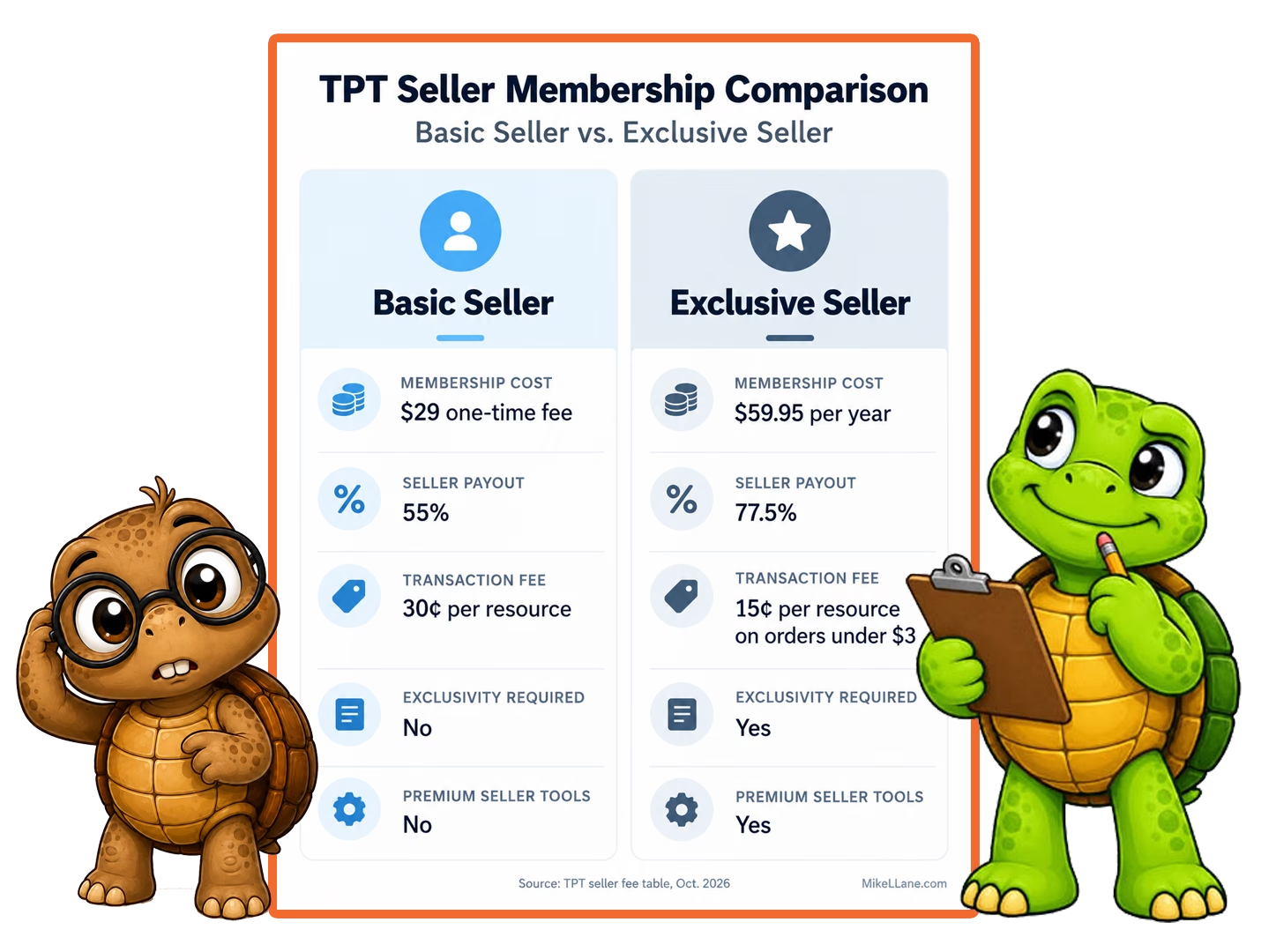
TPT’s current Premium Sellers will continue receiving their existing 80% payout through December 31, 2026. Sellers who move into the new Exclusive membership will receive 77.5% beginning January 1. And that’s where this gets really interesting for anyone selling the same types of products on Etsy.
What Does “Exclusive” Actually Mean?
TPT says Exclusive Sellers agree that digital educational products that can be sold on TPT will be sold only through TPT. You can still promote those products elsewhere. Having them on your own website is fine. You can even have product pages elsewhere that direct shoppers to TPT. But the actual transaction for an eligible digital educational resource must take place through TPT. So, for example, you could write a blog post about one of your classroom resources and include a Buy Now button. That button could send the shopper to the product on TPT. No harm, no foul. All is right with the world and TPT.
What you couldn’t do as an Exclusive Seller is take payment on your website for that same eligible digital educational product. And the same issue applies to Etsy.
Can TPT Exclusive Sellers Still Sell on Etsy?
Yes — but not necessarily the same digital educational products. This is an important distinction because sellers are understandably seeing the word “exclusive” and wondering whether they need to shut down an Etsy shop they’ve spent years building. TPT specifically says Exclusive Sellers are still allowed to sell several types of products away from TPT.

Those currently include:
- Physical products
- Courses and professional development
- Boom Cards
- Kindle books
- Digital products unrelated to education or teaching, such as certain clip art and fonts
- Free digital educational resources, subject to TPT’s rules
What Exclusive Sellers cannot sell elsewhere includes paid digital educational resources that qualify for TPT, memberships or subscriptions providing access to those resources, and licenses for those resources. So the question shouldn’t be “do I have to close my Etsy shop?” Instead, it should be “Which products in my Etsy shop would conflict with the TPT Exclusive Seller plan?” That’s something sellers should figure out before deleting listings. Or entire shops, for that matter.
What Happens If You Want to Keep Selling the Same Resources on Etsy?
TPT isn’t forcing every seller to become exclusive. Sellers who want to continue selling digital educational resources through Etsy, their own checkout, or other marketplaces can remain or become Basic Sellers.
But the tradeoff is significant. Basic Sellers receive 55% of sales, compared with 77.5% for Exclusive Sellers, and Basic Sellers pay a 30-cent transaction fee per resource sold. For an existing Premium Seller currently receiving 80%, that can make the decision feel especially painful, and it also means this isn’t a simple question of selecting the higher percentage. Just because 77.5% is better than 55%, doesn’t mean becoming a TPT Exclusive Seller is the easy choice.
Basic Doesn’t Mean There Are No Rules
Choosing Basic lets you continue selling eligible digital resources on Etsy or elsewhere, but that doesn’t mean anything goes. TPT says Basic Sellers who offer the same resources on other platforms are expected to keep their prices consistent. TPT also doesn’t allow sellers to use their TPT store to send shoppers somewhere else to complete the purchase.
So you could keep that worksheet on both TPT and Etsy. You just can’t make it $8 on TPT, $5 on Etsy, and then slap a sign on the TPT listing saying, “Psst… Sheldon knows where the cheaper one is.”
You have to consider the revenue you’re potentially giving up elsewhere. If Etsy, your website, or another marketplace generates meaningful sales for your educational products, those sales belong in the equation too. You may be giving up the amount you make across the board just for an “exclusive” membership. That’s going to be one of the biggest questions sellers need to answer before January.
Existing Premium Sellers Have Until December 31

Current Premium Sellers don’t have to make an immediate decision, but making the decision during Q4 is just another added pressure point, in my opinion. They will remain Premium Sellers and continue receiving the existing 80% payout through December 31, 2026. But you also have to take into consideration what is involved in the transition of becoming a TPT Exclusive Seller or dropping to a Basic Seller plan.
To become an Exclusive Seller beginning January 1, existing Premium Sellers must opt in by December 31 at 11:59 p.m. Eastern. If they do nothing, TPT says their account will automatically convert to the Basic Seller membership on January 1. TPT will waive the normal $29 Basic Seller fee for Premium Sellers who are automatically converted during this transition. It will also issue a prorated refund for unused time remaining on an existing Premium membership, calculated at $5 for each remaining month, another timely factor to consider.
One Important Deadline Difference for Basic and New Sellers
Existing Premium Sellers who opt into Exclusive before the end of the year don’t have to meet the exclusivity requirements until January 1, 2027. But the situation is different for Basic Sellers and new sellers.
If they sign up for the Exclusive membership now, TPT says the exclusivity terms begin immediately, even though they’ll receive the introductory 80% payout through December 31. That’s an important distinction if someone is currently selling the same educational resources on Etsy and sees that temporary 80% payout as an incentive to switch early.
Be Careful About Switching Back and Forth
There’s another detail sellers should know before opting into Exclusive and this one is definitely worth paying attention to. You can leave the Exclusive Seller membership later and switch back to Basic. But once you do, TPT says you’ll have to wait one year before becoming an Exclusive Seller again.
That makes this more than a casual toggle you can flip whenever one marketplace has a slow month. This also creates added pressure, in my opinion. I’m sure they have their reasons, but the choice can be complicated enough without this stipulation. Sellers should probably look at their numbers before making the decision.
What Etsy Sellers Should Do Before January 1st
I wouldn’t start deleting Etsy listings because of an email. There’s time, but you do have to start thinking about it soon. Waiting until you’re in the middle of the holiday madness might prove to be a mistake, lol.
Instead, this is a good opportunity to actually inventory your business. Look at which of your Etsy products are educational digital resources that could fall under TPT’s exclusivity requirement. Then look at what those products earn on Etsy compared with what you earn (or realistically expect to earn) on TPT. You may discover that TPT accounts for the overwhelming majority of that part of your business. Someone else may discover that Etsy and their own site generate too much revenue to give up. Others might decide to keep Etsy but change what they sell there.
Making the TPT and Etsy Pivot

For example, TPT explicitly allows Exclusive Sellers to continue selling physical products away from TPT. That opens up another possibility. Instead of thinking, “I have to close my Etsy shop,” the better question could be, “What should my Etsy shop become?”
That’s a much more interesting business decision, and one that will depend heavily on your product mix and where your revenue currently comes from. Tater Tot would immediately suggest mugs. Tater suggests mugs for everything, lol.
If you’re already questioning how much Etsy should factor into your long-term business, I’ve also looked at whether selling on Etsy is worth it. If you are unsure about Etsy, this article could help.
What About Sellers With Multiple TPT Stores?
TPT says sellers operating multiple TPT stores cannot make one Basic and another Exclusive. That is another wrinkle in this situation when choosing TPT Exclusive Seller or Basic. All stores operated by that seller must use the same membership type. That could matter quite a bit for sellers who have separated brands or teaching niches into multiple storefronts.
Why This Rule Could Be Especially Frustrating
The problem is that sellers with multiple TPT stores may have built those stores for completely different reasons. One store might be heavily focused on products that already sell well on TPT, while another could contain resources that also perform well on Etsy or through a seller’s own website. In that situation, being able to choose Exclusive for one store and Basic for another would give the seller a lot more flexibility.
Imagine Store A earns almost everything through TPT while Store B has built a healthy Etsy following. Logically, you might want Store A to go Exclusive and Store B to remain Basic. TPT says nope… both stores have to choose the same membership type.
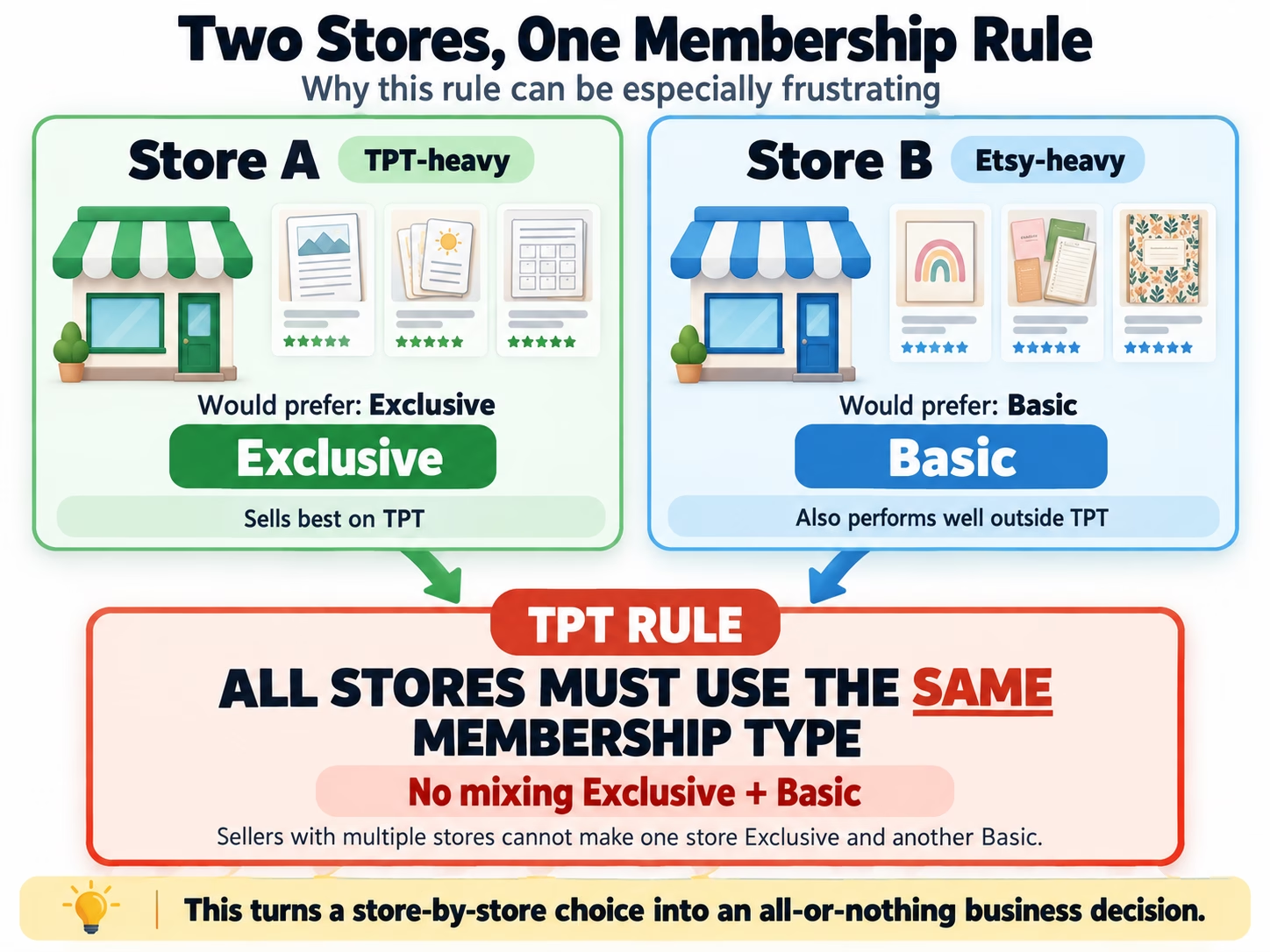
If one store makes exclusivity worth it, the seller still has to consider what they could lose by making every other store Exclusive too. And if one smaller store depends heavily on Etsy or outside sales, that could affect the decision for the seller’s entire TPT business.
So for sellers with multiple stores, this really isn’t just a question of which membership works best for each shop. It becomes a much bigger all-or-nothing business decision across every TPT store they operate.
TPT Is Holding a Town Hall on October 8
TPT has scheduled a Town Hall webinar for October 8 at 7 p.m. Eastern — 6 p.m. Central to discuss the Exclusive Seller transition. TPT says the registration link will also provide access to a recording after the event.
TPT Town Hall Meeting Registration
I’m registered for it, and I’ll be watching specifically for clarification around sellers who operate across multiple marketplaces.
Questions I Still Want TPT to Clarify
The announcement answers quite a bit, but there are still some gray areas that could make a big difference in how sellers handle exclusivity. And as anyone who sells digital products knows, “gray area” is usually where things get fun, lol.
How broadly will TPT interpret “digital educational resources”?
That’s probably going to be particularly important for products that sit somewhere between educational and general-use digital products. A classroom worksheet is pretty obvious. A digital planner made specifically for teachers probably is too. But what about a generic planner that happens to be popular with teachers? What about clip art that can be used in classrooms but can also be used on birthday invitations, mugs, or a Sheldon Tortellini motivational poster? That’s where the definition starts to matter.
Sellers need to know whether TPT is looking at what a product is, how it’s marketed, who it’s marketed to, or some combination of all three.
How Will TPT Handle Products That Cross Multiple Categories?
Some products don’t fit neatly into one box. A seller might create clip art, templates, planners, or other digital resources that have both educational and non-educational uses. TPT specifically allows certain non-educational digital products to be sold elsewhere, but the line could get fuzzy depending on how a product is packaged or marketed.
If a set of graphics is marketed to teachers on TPT but sold as general-purpose graphics on Etsy, where does TPT draw that line? That’s exactly the sort of thing I’d like to hear addressed during the Town Hall.
What if the product sold elsewhere isn’t exactly the same as the TPT version?
I’d also like more clarity around different versions of the same product, bundles, editable resources, commercial licenses, and other situations where a product sold elsewhere may not be an exact duplicate of the TPT version. For example, what happens if the TPT version includes 20 worksheets, but the Etsy version includes 30 worksheets, a bonus activity, and a different license?
At what point does it become a genuinely different product rather than another version of the same resource? That’s the kind of distinction sellers are probably going to want nailed down before they start deleting listings.
What penalties will rule breakers actually face?
And, of course, sellers will want to understand how TPT plans to handle and enforce violations of the Exclusive Seller agreement. TPT’s FAQ currently states that penalties may apply if a seller violates the Exclusive Seller terms, but “may apply” leaves a lot of room between a warning email and your store getting launched into the sun. Sellers need additional detail before drawing conclusions about what enforcement will look like in practice.
FAQs
Is TPT getting rid of Premium Seller?
Yes. TPT stopped offering new Premium Seller memberships on October 1, 2026. Existing Premium Sellers remain Premium through December 31, after which they can become Exclusive Sellers or transition to Basic.
When does TPT Exclusive Seller begin?
For existing Premium Sellers, the Exclusive Seller membership begins January 1, 2027. Current Premium Sellers continue receiving their existing 80% payout through December 31, 2026
What is the TPT Exclusive Seller payout?
The Exclusive Seller payout will be 77.5% beginning January 1, 2027.
What is the TPT Basic Seller payout?
Basic Sellers receive 55% of sales and pay a 30-cent transaction fee per resource.
Can a TPT Exclusive Seller also sell on Etsy?
Yes, but TPT says eligible paid digital educational resources must be sold exclusively through TPT. Exclusive Sellers may still sell certain other products elsewhere, including physical products, courses, Boom Cards, Kindle books, and certain non-educational digital products.
Do TPT Exclusive Sellers have to close their Etsy shops?
Not necessarily. Sellers can continue operating stores elsewhere, but eligible digital educational resources covered by TPT’s exclusivity requirement cannot be sold there. The product mix of the Etsy shop is what matters.
What happens if a Premium Seller does nothing?
TPT says existing Premium Sellers who don’t opt into Exclusive by the deadline will automatically become Basic Sellers on January 1, 2027.
Can I leave TPT Exclusive Seller later?
Yes. However, after leaving Exclusive for Basic, TPT says there is a one-year waiting period before the seller can enroll in Exclusive again.
Do I get a refund if I leave TPT Exclusive Seller?
No. TPT says Exclusive Seller annual membership fees are not refunded if you switch back to Basic. You’ll also have to wait one year before becoming an Exclusive Seller again.
Do I get a refund if I leave TPT Exclusive Seller?
No. TPT says Exclusive Seller annual membership fees are not refunded if you switch back to Basic. You’ll also have to wait one year before becoming an Exclusive Seller again.
Can TPT Exclusive Sellers give away educational resources elsewhere for free?
TPT allows Exclusive Sellers to give away certain digital educational resources elsewhere, but if the same resource is free off TPT, you can’t charge for that same resource on TPT.
TPT Exclusive Seller or Basic: Look at Your Whole Business Before You Decide

A 77.5% payout looks substantially better than 55%. It is. Normally, lol. But that doesn’t automatically mean Exclusive will be the better financial decision for every seller. If becoming Exclusive requires you to give up thousands of dollars in annual Etsy or website sales, the higher TPT percentage may not compensate for what you’ve lost.
On the other hand, if your off-TPT sales are tiny compared with your TPT business, exclusivity could be a completely different calculation. That’s why I think the next useful step isn’t another article simply explaining what TPT announced. It’s doing the math.
Doing the TPT Exclusive Seller Math
That’s the math sellers need to work through before choosing between TPT Exclusive Seller and Basic. The right answer may look very different depending on how much revenue comes from TPT versus Etsy, a website, or other marketplaces. Each seller has their own set of variables they’ll have to consider.
For now, though, the biggest thing to know is that you have time. Existing Premium Sellers remain Premium through December 31. Don’t shut down a shop or start removing years’ worth of listings until you understand exactly which products are affected and what each part of your business is actually earning.