
Unless you have been living under a rock, you’ve probably heard someone recommend Pinterest marketing as a way to bring traffic to your online business. For the right business, Pinterest definitely can be worthwhile, but it’s not always as simple as some make it sound. They say create attractive Pins, add a link, and wait for people to flock to your website or shop, but anyone who has spent time trying to market a business online knows it’s rarely quite that easy, lol. So let’s take a closer look at Pinterest marketing and whether it’s actually worth the effort.

How Does Pinterest Work for Business?
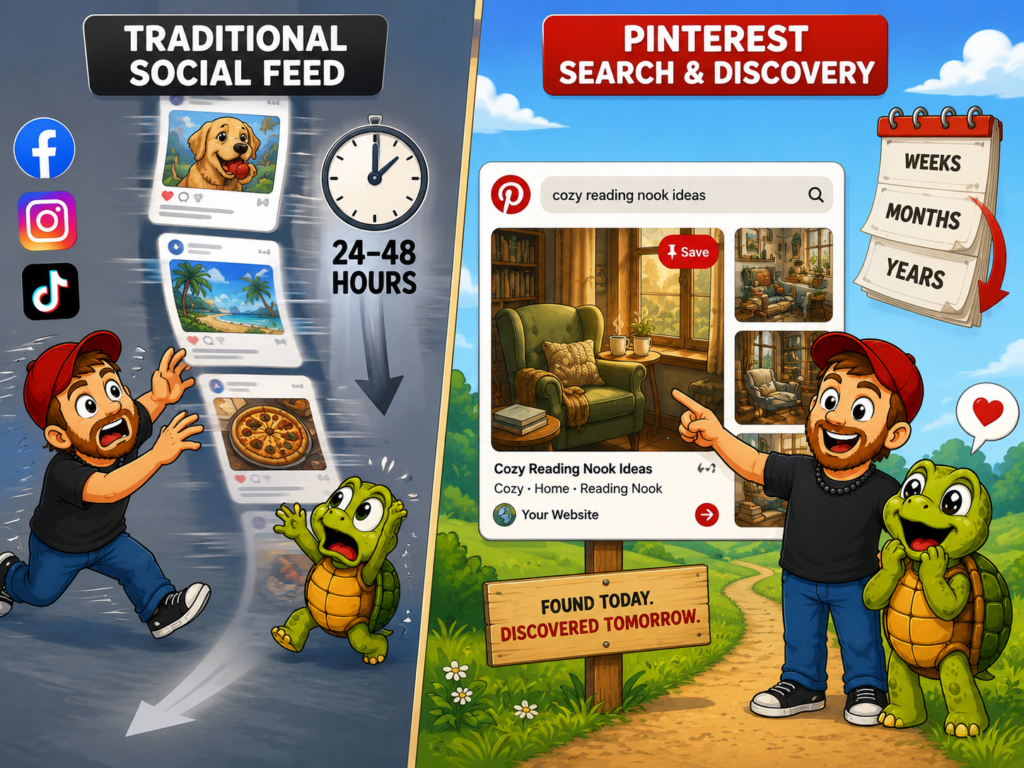
Pinterest is often grouped with social media platforms such as Facebook, Instagram, and TikTok, but it doesn’t really work like any of them. It combines some of the social feel of those platforms with the power of a search engine. People follow accounts and engage with content, but Pinterest is primarily built around search, discovery, planning, and saving ideas for later. The easiest way to understand Pinterest is as a visual discovery engine with some social features attached. This is what makes Pinterest as a marketing tool different from most traditional social media platforms.
On Facebook, Instagram, or TikTok, a post may receive a quick burst of attention before disappearing into the feed. For example, a Facebook post might get most of its views and engagement within the first day or two, then quickly get buried beneath newer content, right? A useful Pinterest Pin, however, may continue appearing in search results, recommendations, and related content long after it was originally published, sometimes for months or even years. This can be powerful!
Pinterest Marketing Statistics
Pinterest is not a small or forgotten platform, either. In the first quarter of 2026, Pinterest reached an all-time high of 631 million monthly active users worldwide. That is an increase of 11% over the previous year. The potential value of Pinterest marketing is not simply the size of its audience, however. People frequently visit Pinterest while actively searching for ideas, products, inspiration, and solutions rather than simply scrolling through updates from friends.
So, is Pinterest worth it for business?
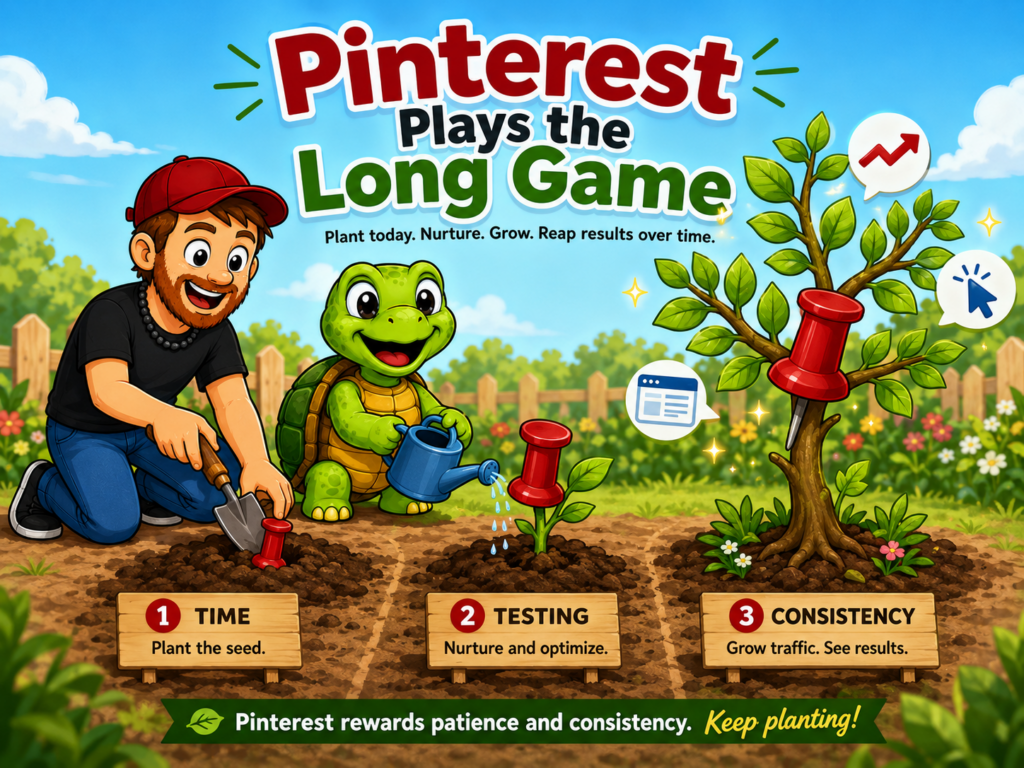
It certainly can be, especially for businesses with visual products, searchable topics, evergreen content, and a useful destination to send visitors. However, Pinterest is not an automatic traffic machine. It is also rarely the fastest platform for businesses expecting immediate views, clicks, or sales. Pinterest tends to play the long game, and that comes with both major benefits and plenty of frustration.
In this article, we’ll look at how Pinterest works for business, what it costs, how Pinterest may generate website traffic, and which types of businesses are most likely to benefit from using Pinterest as a marketing tool. By the end, you should have a much clearer idea of whether Pinterest deserves a place in your own marketing strategy.
What Is Pinterest for Business?
The first thing we need to tackle is understanding what Pinterest actually is. Pinterest describes itself as a visual discovery engine where people search for and save ideas. Users browse Pins, organize them into boards, and follow links to learn more about the products, projects, and information they discover. They use Pinterest for inspiration, ideas, motivation, planning, and organization.
For an online business, this creates opportunities to place a product, service, or useful piece of content in front of people who may already be searching for something related. However, you need to approach Pinterest strategically. Posting random product images and hoping people click isn’t much of a Pinterest strategy. To access the tools needed to measure your efforts, you’ll need a Pinterest business account.
A Pinterest business account is designed for brands, sellers, creators, bloggers, and other businesses that want to promote products or content. If you are reading this article, that means you! It includes tools such as Pinterest Analytics, advertising options, audience insights, and access to Pinterest Trends.
What Is the Difference Between a Personal and Business Pinterest Account?
A personal Pinterest account is mainly designed for discovering, saving, and organizing ideas. You can create boards, save Pins, and publish your own content, but it does not offer the same level of performance information and marketing tools as a business account.
A Pinterest business account includes the basic features of a personal account while also providing tools for measuring and promoting your content. Business account owners can review performance metrics such as impressions, saves, Pin clicks, and outbound clicks. This information can help you determine which Pins are getting seen, which ones people are engaging with, and whether anyone is actually clicking through to your website or shop.
That final metric is especially important. Thousands of impressions may look encouraging, but impressions alone don’t necessarily generate traffic or sales. A business account gives you the data needed to look beyond the big numbers and determine whether your Pinterest marketing is producing meaningful results.
You can create a new Pinterest business account or convert an existing personal account. If you convert an account, Pinterest says your existing Pins and followers will remain in place, and you can switch the account back to a personal account later. I will show you a step-by-step guide on how to do this in a separate post.
For most shop owners, bloggers, creators, and service providers using Pinterest as part of a marketing strategy, a Pinterest business account makes more sense. It provides the information needed to see what’s working, what’s not, and whether all that Pinning is actually accomplishing anything. This data is crucial.
Is Pinterest Free for Business?

You might have been expecting the typical gut punch here, but good news! Creating a Pinterest business account is free. Pinterest does not charge a monthly subscription to create Pins, build boards, view analytics, or maintain a business profile. You only pay Pinterest if you choose to run paid advertising. Pinterest ads are optional, and businesses can set their own advertising budgets. We’ll discuss their ads platform in a different article, and I’ll even show you a technique using their ad platform for Pinterest SEO without having to spend a dime!
It’s also free to add products to Pinterest and tag products in organic Pins. Some advanced shopping features require businesses to meet Pinterest’s merchant requirements, but you do not have to pay simply to open a business account and begin publishing content.
Of course, that doesn’t mean Pinterest is completely free in every practical sense. Creating graphics, writing descriptions, researching keywords, publishing consistently, and reviewing analytics all require time. You may also choose to pay for design software, scheduling tools, keyword research tools, or advertising. But the Pinterest business account itself is free. The time and work required to use it effectively are not.
How Businesses Use Pinterest to Reach Customers
When using Pinterest for business, you are essentially creating content that helps people discover your products, services, or ideas while they’re searching and planning. Pinterest uses a person’s searches, interests, and previous activity to decide which content may be relevant to them. Your Pins may then appear in search results, home feeds, related-Pin recommendations, and other areas across the platform.
A typical Pin includes:
- An image or video
- A title
- A description
- A destination link
- A connection to a relevant Pinterest board
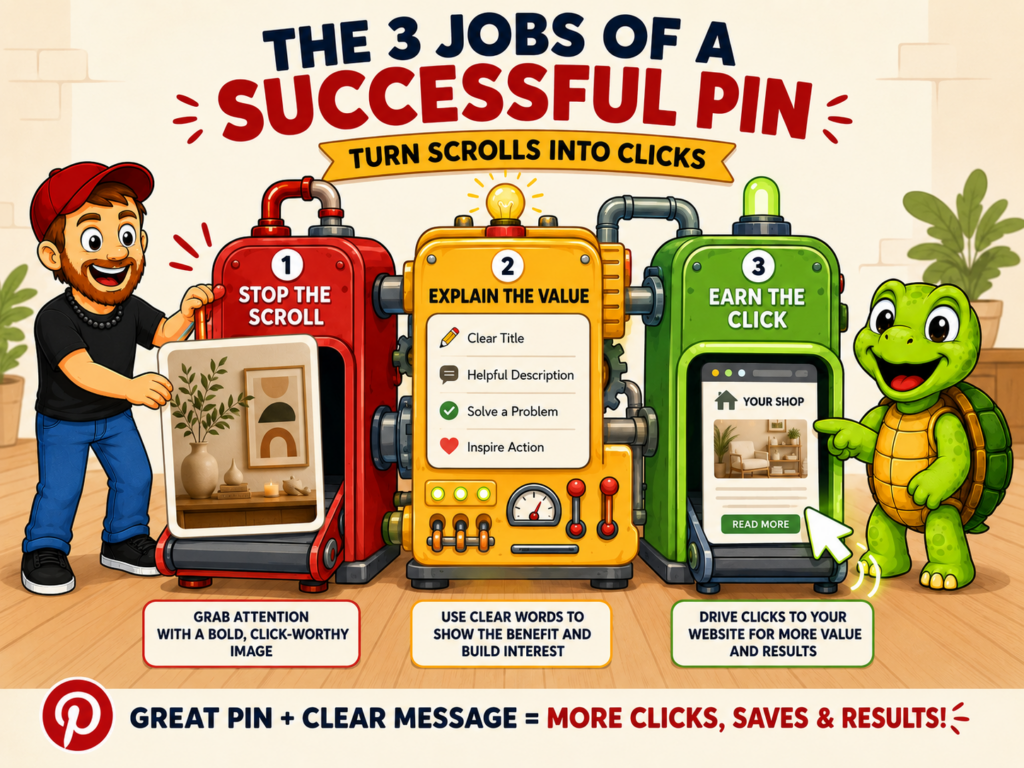
None of these is especially complicated on its own. The trick is getting them all to work together instead of treating the image, keywords, and link like three unrelated chores. Think of them as parts of a machine. Each one has a job to do, and the best results come when they all work together.
When someone discovers your Pin, they may save it for later, open it for a closer look, or click the link leading to your website, online shop, product page, blog article, or another destination.
This is where Pinterest can be a little confusing for business owners. The platform works best when Pins are built around what people are already searching for and lead to a destination that answers a question, solves a problem, or offers something they genuinely want. A Pin may look like a social media post, but it often behaves more like a small visual search result. Its job is to grab someone’s attention, quickly communicate what they’ll find on the other side of the click, and give them a reason to leave Pinterest. We’ll cover this in more detail in another post.
Pinterest Content Has a Longer Shelf Life
As I mentioned earlier, on many traditional social media platforms, content receives most of its attention shortly after it’s published. Pinterest content may continue to be discovered much later because people regularly search the platform while planning future purchases, projects, events, and activities.
That doesn’t mean every Pin you publish will magically send traffic forever. Pinterest still considers factors such as relevance, visual appeal, keywords, engagement, and the interests of individual users. In other words, Pinterest may give your content a longer shelf life, but it doesn’t put every Pin on life support forever. Still, its search-and-discovery structure allows useful content to be found well beyond the day it was originally posted.
This is one reason businesses often create Pins around topics people may continue searching for, including:
- Gift ideas
- Home decor
- Recipes
- Wedding planning
- Fashion inspiration
- Seasonal products
- Tutorials
- Business advice
- Craft projects
- Printable resources
In other words, Pinterest tends to work best when you create Pins around something people are already looking for rather than posting whatever crossed your mind five minutes ago.
What Pinterest Can Do for Your Business
Pinterest can help place your products, services, or content in front of people who are actively searching, planning, comparing ideas, or looking for inspiration. Businesses commonly use Pinterest to:
- Send visitors to an online shop
- Promote products or services
- Drive traffic to blog articles
- Grow an email list
- Introduce people to a brand
- Share tutorials and helpful resources
- Reach potential customers earlier in the buying process
The important thing to understand is that Pinterest doesn’t complete the entire marketing process for you. Pinterest may help someone discover your content, but your Pin still has to earn the click. Once that person arrives, your website, shop, product page, or article must persuade them to take the next step. Pinterest can introduce you to a potential customer, but it can’t close the deal for you.
Can Pinterest Drive Traffic to Your Website or Shop?
Absolutely! Pinterest can drive traffic to a website, online shop, product listing, blog post, or landing page because Pins can include links that lead users away from the platform. However, not every impressive-looking Pinterest number represents actual traffic. Pinterest reports several different performance metrics:
- Impressions: The number of times a Pin appeared on someone’s screen
- Saves: The number of times someone saved the Pin
- Pin clicks: The number of times someone clicked the Pin to view it more closely
- Outbound clicks: The number of times someone clicked through to a destination outside Pinterest
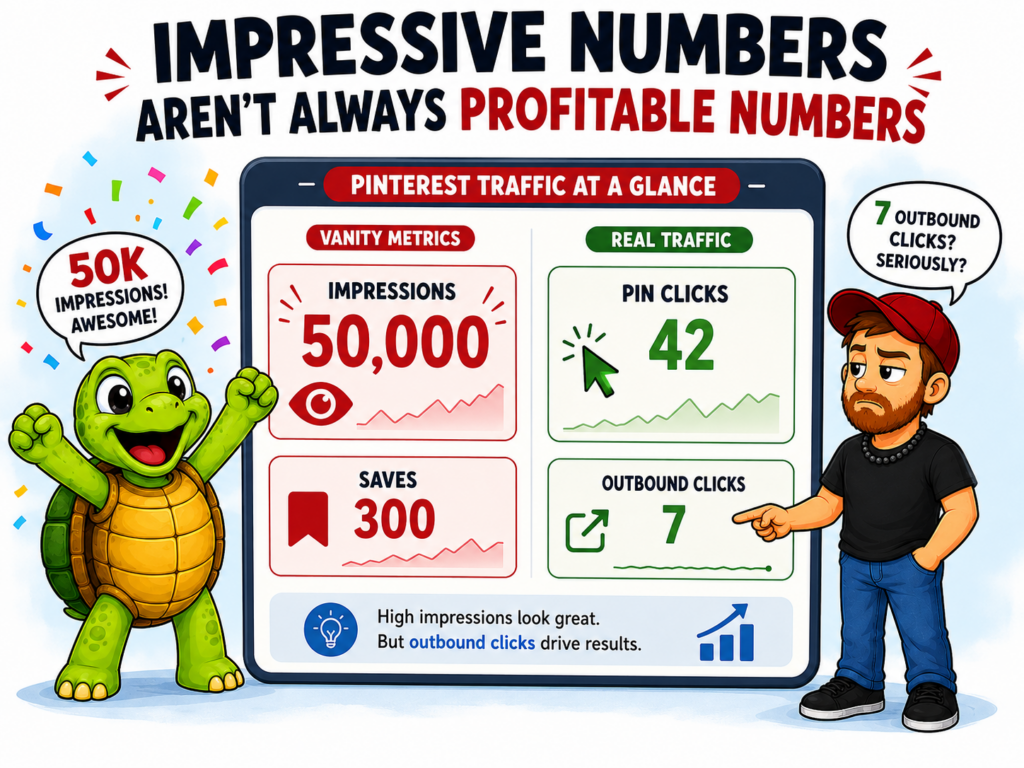
If your goal is website or shop traffic, outbound clicks are one of the most important metrics to watch. A Pin can receive thousands of impressions without sending many people to your website. That may look impressive on a dashboard, but impressive and profitable are not the same thing, lol.
How Do You Get Traffic From Pinterest?
Pinterest traffic usually begins with matching the right content to the right search or interest. This includes creating Pins around topics your audience is already looking for, using clear visuals, writing titles and descriptions that explain the content, and linking each Pin to a relevant destination. Pinterest SEO also works a little differently from website or Etsy SEO. We’ll break down those differences in another post.
Also, the link destination matters just as much as the Pin. A strong Pin cannot rescue a poor product page, slow website, weak offer, or article that doesn’t match what the Pin promised. There’s no sense creating a beautiful Pin just to send people into a confusing mess that won’t convert.
How Long Does It Take to Get Traffic From Pinterest?

There is no universal timeline. Results depend on the topic, competition, account history, content quality, search demand, consistency, and the destination being promoted. Pinterest should be measured over time, not judged by whether the first few Pins take off. Some Pins may attract attention quickly, while others may take much longer to gain visibility. Some may never produce meaningful traffic at all.
That doesn’t mean Pinterest marketing is ineffective. It means businesses should judge it over time using outbound clicks, website visits, leads, and sales instead of expecting every Pin to perform immediately. This is where your Pinterest business account earns its keep. The data can show you which Pins are getting attention, who they seem to attract, and what may be worth repeating.
What Are the Benefits and Drawbacks of Pinterest for Business?
Pinterest can be a useful marketing tool, but its value depends heavily on the type of business you have, the content you create, and what you expect the platform to do for you. It offers some real advantages, but it also comes with limitations that can make it frustrating, time-consuming, or simply not worth the effort for everyone.
Benefits of Pinterest for Business
One of the biggest advantages of Pinterest is that people use the platform to search, discover, plan, and shop. This gives businesses a chance to reach potential customers before they have decided exactly what to buy or which brand to choose. Other potential benefits include:
- A free business account
- Access to analytics
- Direct links to websites and shops
- Content that may remain discoverable long after it is published
- The ability to target specific interests and searches
- Organic product tagging
- Optional paid advertising
- The opportunity to promote the same destination with several different Pin designs
Pinterest can be especially useful for businesses that already create product photos, tutorials, blog content, graphics, or other visual material.
Drawbacks of Pinterest for Business
Pinterest isn’t hands-off marketing. Unfortunately, it doesn’t come with a “post three Pins and become wildly successful” button. Creating Pins takes time, and you may need to test different images, headlines, formats, and topics before you begin to understand what gets attention and what actually earns clicks.
Other drawbacks include:
- Results may take time
- Traffic isn’t guaranteed
- Some niches are more competitive than others
- Strong visuals are important
- Testing may be required
- Consistency is a must
- Platform features and recommendations can change
- Pinterest controls how content is distributed
- Success on Pinterest doesn’t guarantee success on your website or shop
Pinterest can also be frustrating for businesses that treat it exactly like Instagram or TikTok. Posting a few product images and waiting for sales is not much of a Pinterest strategy. Consistent pinning is required to see real results, and this can be very time-consuming. In future posts, we’ll discuss ways to make this part easier, but it’s definitely something you need to know before starting.
Pinterest offers some real advantages, but those benefits only matter if the platform fits your audience, your content, and the amount of time you’re willing to invest. For some businesses, that makes Pinterest a valuable long-term marketing channel. For others, the effort may be better spent elsewhere.
Who Is Pinterest Best For?
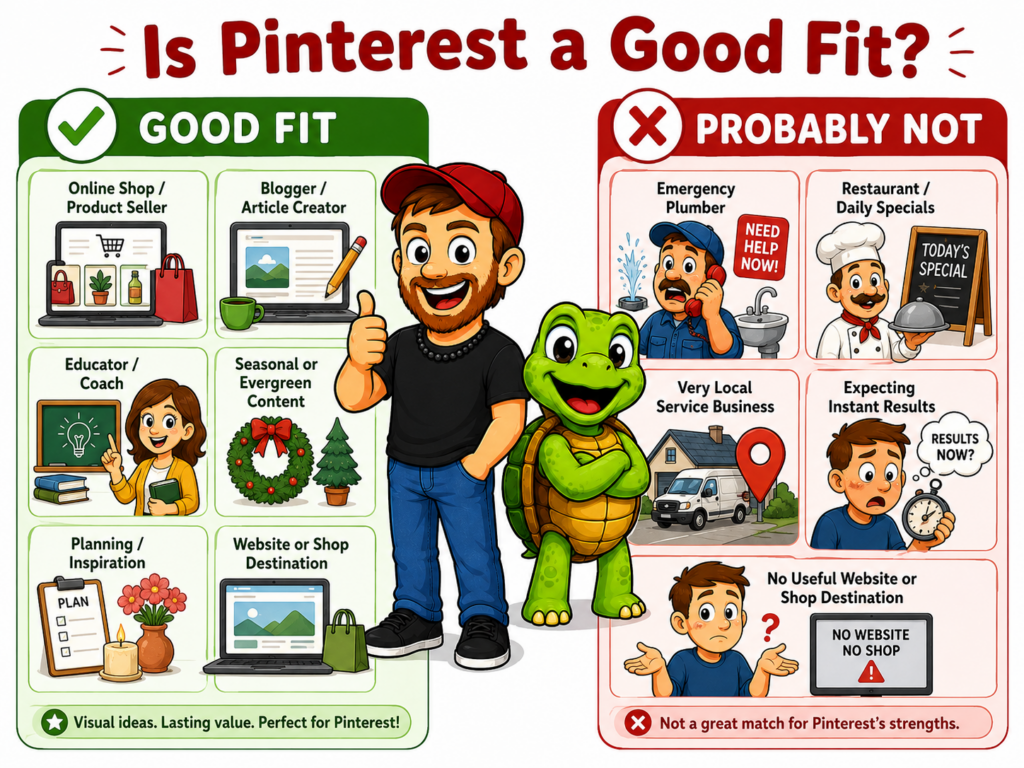
Pinterest may be a good fit for businesses that have:
- Visually appealing products or content
- Topics people actively search for
- Evergreen or seasonal content
- A website, blog, shop, or landing page to send visitors to
- Enough patience to test, learn, and adjust
- The ability to create fresh Pin designs
- Products, services, or information connected to planning, inspiration, education, or shopping
Pinterest is often associated with highly visual categories, but that doesn’t mean it’s only useful for artists, designers, or product sellers. Service providers, educators, affiliate marketers, and bloggers may also benefit if they can turn what they know into useful, searchable visual content.
For example, an accountant could create Pins around tax-preparation checklists. A gardening business might share seasonal planting guides. A business coach could promote articles about pricing, productivity, or goal setting. The topic does not have to be pretty or decorative, but it should be something people are likely to search for, save, or return to later.
Who May Be a Poor Fit for Pinterest?
Pinterest may not be worth the effort for businesses that:
- Expect immediate results
- Don’t have a useful destination for the traffic
- Don’t want to create visual content
- Depend mainly on short-lived announcements
- Serve a very limited local audience with little relevant search demand
- Are unwilling to review performance and make adjustments
- Expect Pinterest to generate sales without any additional work
For example, a local emergency plumber probably wouldn’t get much value from Pinterest because customers need immediate help, not inspiration they plan to revisit later. A restaurant that relies on daily specials and short-lived announcements may find that other platforms are a better fit. The same may be true for a business that serves a very narrow local audience or has no useful website, shop, or landing page to send people to.
The good news is that a Pinterest business account is free, so there’s not much financial risk in trying it. The bigger question is whether Pinterest deserves your time compared with the other social media options available to your small business. The Pinterest account may be free, but your time definitely isn’t.
Is Pinterest Worth It for Business?
Pinterest can absolutely be worth it for businesses with visual, searchable, and useful content, especially when they have a website, online shop, blog, or another destination to send visitors. The platform can put your business in front of people who are actively searching for ideas, comparing options, and planning future purchases. It also gives business owners access to free analytics, direct linking opportunities, product features, and optional advertising tools. These same tools can sometimes even give you ideas for other products to sell, too.
However, Pinterest isn’t a magic traffic machine. Creating an account doesn’t guarantee visibility, and impressive-looking numbers don’t always translate into website visits or sales. As we discussed earlier, a Pin can collect thousands of impressions without producing many outbound clicks.
For a small business, Pinterest is most likely to be worthwhile when:
- Your audience uses Pinterest to search for related ideas
- Your content has ongoing or seasonal search value
- Your Pins clearly communicate what people will find after clicking
- Your website, shop, or landing page is ready to convert visitors
- You’re willing to test, review the results, and make adjustments over time
Pinterest is not worth the effort for every business. If you need immediate attention from every piece of content, Pinterest will feel painfully slow. But if you’re willing to build a searchable library of Pins that can continue introducing people to your business, it may become a useful part of your long-term marketing strategy. For the right business, with useful content and realistic expectations, it can absolutely be worth testing.
Pinterest can also give marketplace sellers another path to their products, especially if they don’t want to rely entirely on Etsy search. You can read more about whether selling on Etsy is worth it for new sellers in my other post.
Want an Easier Way to Plan and Schedule Your Content?
Pinterest works best when you create useful content consistently, but planning, writing, and scheduling posts across multiple platforms can quickly become overwhelming.
1HR Social is a complete content system for business owners, creators, and sellers who want consistent visibility without burnout, guesswork, or living on their phone. It includes content planning, built-in scheduling, platform guidance, content structure, training, and community support to help you post more strategically instead of posting randomly and hoping something works.
Affiliate disclosure: If you sign up for 1HR Social through my link, I may earn a commission at no extra cost to you.