
In this post, we’re discussing the ins and outs of social media marketing. We’ll also look at how social media for small business can help you reach new people and stay connected with customers. Social media has become part of everyday life and can play an important role in an online business’s success. It can help a small business reach new people, stay connected with customers, and build familiarity around its products or services. But it can also become a giant distraction. If you aren’t careful, it can consume hours of your time without producing meaningful results, lol. The difference usually comes down to whether you’re using social media with a clear purpose. Otherwise, you may simply be posting because you feel like you are supposed to.
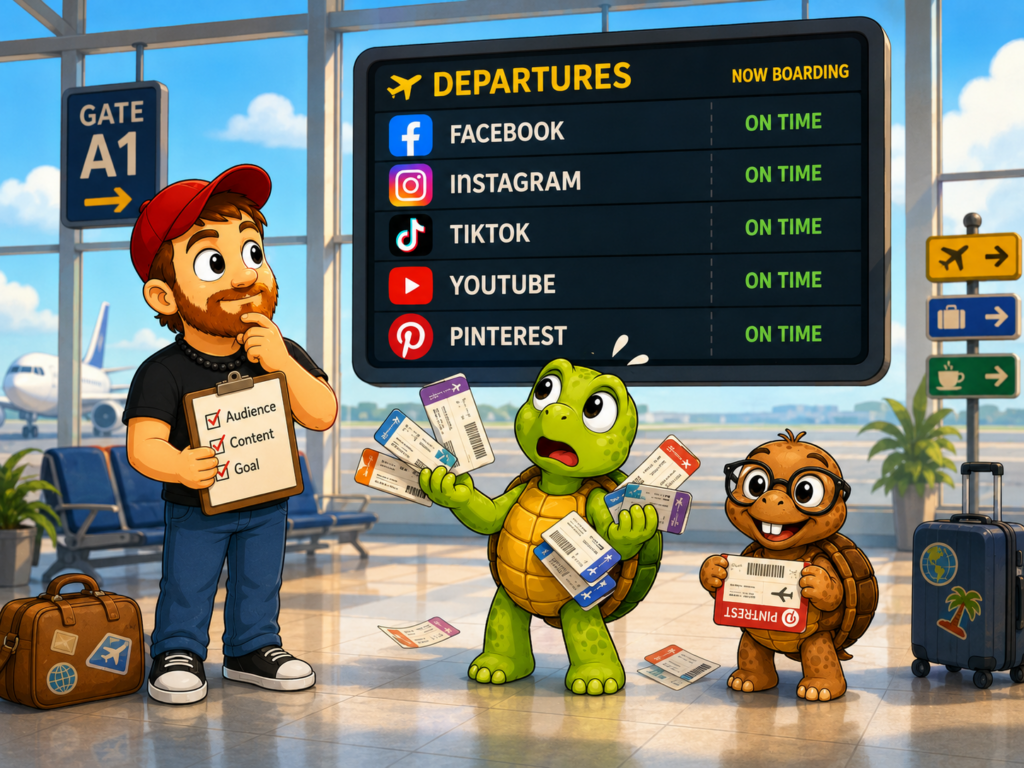
Social media can absolutely help a small business, but only when the business uses it with a clear purpose. You don’t need to master every platform, post constantly, become an influencer, or “go viral” to see results. You do need to understand who you’re trying to reach. Choose a platform that makes sense for that audience, then consistently create content that supports a real business goal. This beginner’s guide explains what social media marketing is and whether it’s worth the effort for your small business. It also looks at which platforms may make the most sense for your business.
What Is Social Media Marketing?
Social media marketing uses platforms such as Facebook, Instagram, Pinterest, TikTok, YouTube, and LinkedIn. Businesses use them to connect with potential customers and promote what they offer. Seems like a dumb question, right? You’d be surprised how many people think they understand social media marketing but miss the most important part when they try to use it. The phrase itself gives us the clue. Most businesses understand the media part without giving it much thought. A social media post must contain something “media”, whether it’s written content, an image, a graphic, or a video. That part is usually a no-brainer.
Why the “Social” Part Matters
The part I’ve seen countless business owners and community members overlook is the social part. People don’t usually open Facebook, Instagram, TikTok, or Pinterest hoping businesses will show them one advertisement after another. They expect content that interests, helps, entertains, inspires, or connects with them. When every post feels like a hard sell, they’re far more likely to keep scrolling. If you get nothing else from this article, remember this:
What many people fail to understand is that marketing through social media doesn’t mean every post should be an advertisement. In fact, businesses that use social media well rarely hard-sell their audience at all.
A small business can use social media to:
- Introduce its products or services
- Engage with its audience in meaningful ways
- Answer common customer questions
- Share useful information
- Demonstrate how a product works
- Show customer results or reviews
- Build recognition and trust
- Send people to a website, shop, email list, or product page
Social media marketing includes all the content and interactions that help the right people discover your business, understand what you offer, and become more comfortable buying from you. There are two kinds of businesses using social media: the pushy used-car salesman and the helpful friend.
You want to be the friend, lol.
Organic Social Media vs. Paid Social Media
Social media marketing generally falls into two basic categories: organic and paid. Organic social media includes the regular posts, videos, comments, and interactions you create without paying the platform to distribute them. This is the natural process of publishing content, attracting attention, and building an audience over time. You publish the content, and the platform decides which users may see it based on factors such as relevance, engagement, and user behavior. Paid social media includes advertisements, boosted posts, and promoted content that a business pays the platform to show to a larger or more targeted audience.
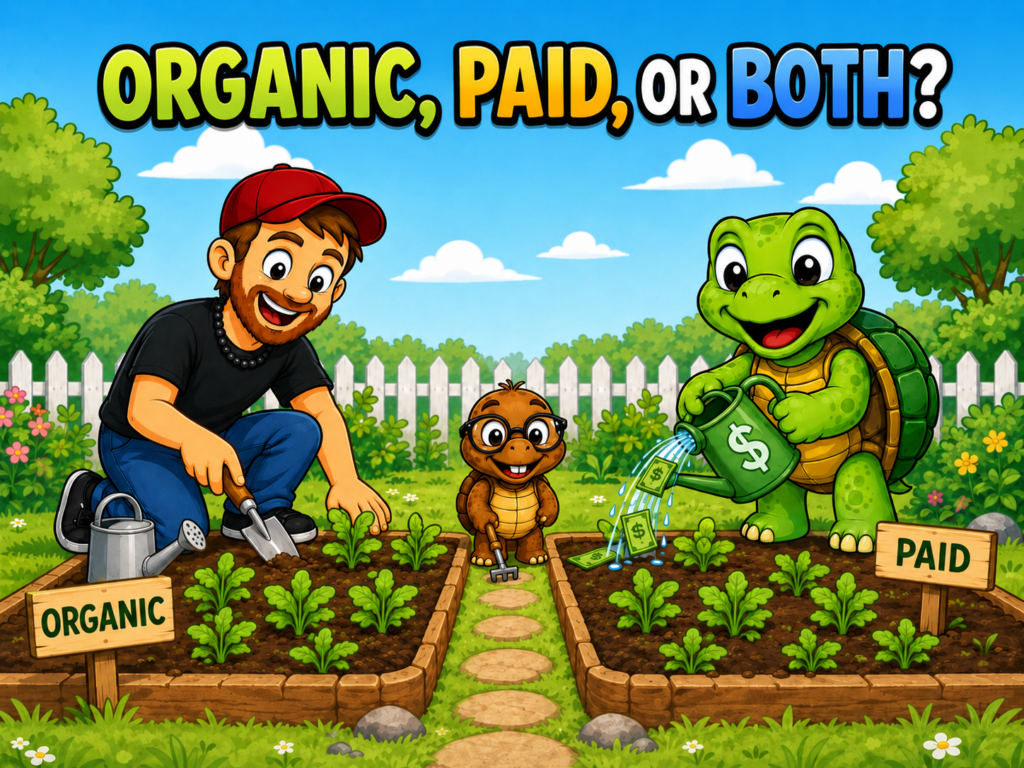
A small business can use organic social media, paid social media, or a combination of both. However, paying to promote a post does not automatically make the message effective. Advertising simply puts the content in front of more people. If the message, offer, or creative is weak, paying for additional reach will not magically fix it.
Here’s a useful beginner tip if you’re considering paid advertising: build some organic activity first. Your organic posts can help you learn which products, messages, and creative ideas attract the right people. On Meta, you can use engagement with your Facebook and Instagram content to build advertising audiences, such as people who interacted with your account or watched your videos.
That doesn’t mean Meta will automatically know exactly who should buy from you before your first campaign. Your ads will still go through their own learning process, especially when you optimize for clicks, leads, or purchases. However, organic activity can help you learn who responds, what they respond to, and which products or messages attract attention. Those early signals can help you build more focused campaigns instead of paying to discover everything from scratch.
Is Social Media Worth It for a Small Business?
Social media can be worth it for a small business, but only when it supports the business rather than becoming a separate full-time job. There will always be work involved, but it shouldn’t take more time away from the business than it gives back. This is one of the biggest struggles I see business owners face, and later in this article, we’ll look at a system designed to make it easier.
How Social Media Influences Buying Decisions
Social media is no longer just a place to keep up with friends, watch entertaining videos, or scroll through cat memes. It’s become part of how consumers discover businesses, research products, read reviews, and make buying decisions. Deloitte Digital found that 61% of consumers had discovered a new brand or product through social media within the previous 12 months, while Sprout Social reported that 76% of users said social content had influenced a purchase during the previous six months.
When people research products and services, social platforms are also beginning to compete with traditional search engines. Sprout Social found that 37% of consumers prefer to start with social platforms when searching for product reviews and recommendations. Among Gen Z, 41% turn to social media first when looking for information, compared with 32% who begin with traditional search engines.
That doesn’t mean Google is no longer important or that every customer begins shopping on TikTok or Instagram. Social platforms are especially useful when people want demonstrations, reviews, recommendations, and real-world examples before buying. Customers can see products in use, hear from other buyers, ask questions, and get a better sense of the business behind the offer. The purchase may still happen on a website, marketplace, or in person, but social media may be what introduced the product, answered the customer’s questions, or convinced them to buy. In other words, it often influences the buying journey even when it doesn’t receive credit for the final sale. With that in mind, social media can help a small business in several ways.
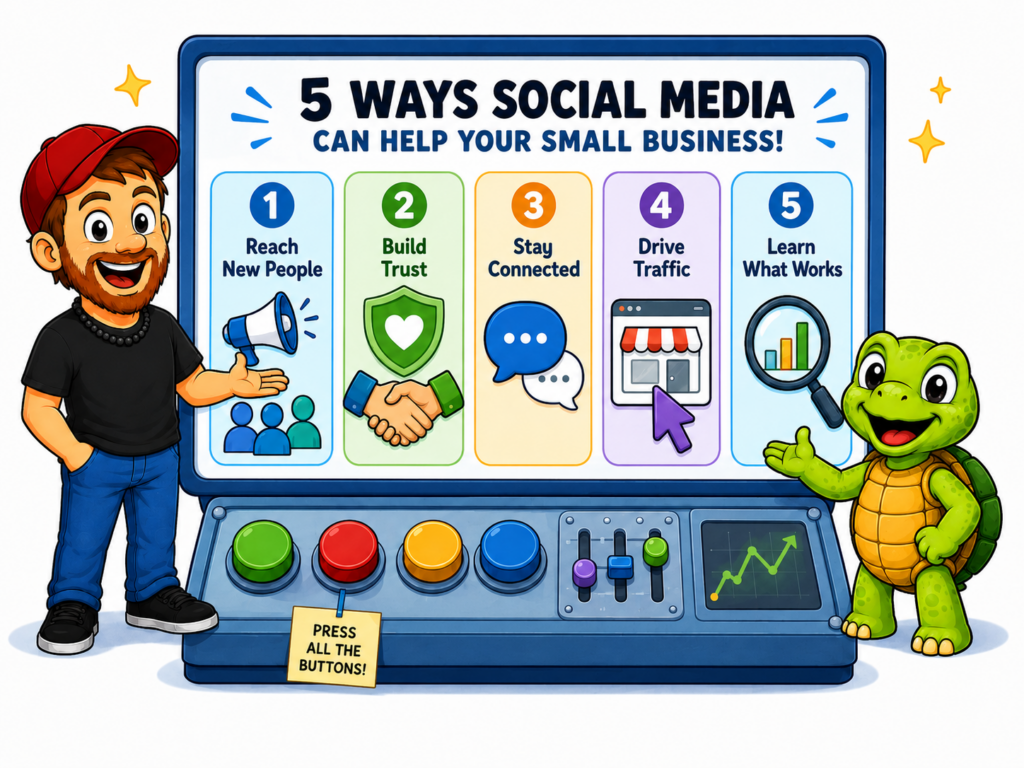
Reach People Who Have Never Heard of Your Business
A useful post, video, Pin, or customer recommendation can introduce your business to someone who might not have found it otherwise. Social media gives small businesses access to audiences that may be difficult to reach through a physical location, traditional advertising, or existing customer contacts alone.
Build Trust Before Asking for a Sale
People often look at a company’s social media accounts before deciding whether the business appears active, legitimate, and helpful. A regularly updated account can show that real people are behind the business while giving customers a chance to see your products, your knowledge, and the way you communicate.
Stay Connected With Existing Customers
Not every follower is ready to purchase today. Social media helps your business remain visible so customers are more likely to remember you when they are ready. It can also introduce existing customers to new products, helpful information, seasonal offers, and other reasons to return.
Drive Traffic to Something You Control
Social media can direct people to your website, online shop, product listings, newsletter, or another destination. This matters because you don’t own your social media account in the same way that you own a website or email list, and platform rules or algorithms can change. The goal should be to move people toward the business assets you control. Having followers is great. Turning them into loyal customers is better.
Learn What Your Audience Responds To
Comments, questions, clicks, saves, shares, and other activity can reveal what your audience wants to learn more about. One customer question could become a social media post, blog article, product improvement, or even a new offer. That kind of feedback can be incredibly valuable to your business.
Which Social Media Platform Should a Small Business Use?
The best social media platform for your business isn’t necessarily the one everyone is currently talking about. It’s the one that meets three basic criteria:

- Your intended audience already uses it.
- Its content format fits what you can realistically create.
- It supports the goal you’re trying to accomplish.
This is where I see many small businesses go wrong. They choose a platform because it’s popular or because someone else is succeeding there, without considering whether their customers use it or whether they can realistically create the kind of content that works there. Knowing your customer demographics makes it much easier to choose a platform that fits your business. We’ll talk more about identifying your ideal customer in another post, but first, here’s what you need to know about the major platforms.
A Quick Note About the Numbers
The following statistics come from different types of audience and usage research, so they should be treated as practical comparisons rather than exact head-to-head measurements.
Facebook may not be the newest or flashiest platform, but it still reaches a broad adult audience. It is used by 71% of U.S. adults, including 80% of adults ages 30–49. Its U.S. adult advertising audience is approximately 53% female and 47% male, while active adult users spend about 34 minutes per day on the platform. Facebook can be especially useful for local businesses, services, events, community building, and businesses trying to reach a broad adult audience. Businesses can use a Facebook Page to share updates, images, videos, links, offers, events, and customer information. Dismissing Facebook as outdated could still mean ignoring a large portion of your potential customers.
Instagram is built around visual content, including photos, graphics, Stories, carousels, and short-form video. It can work especially well for products, food, fashion, art, home decor, fitness, beauty, travel, and almost any business that can show what it does visually. Instagram is used by half of U.S. adults, including 80% of adults ages 18–29. Its U.S. adult advertising audience is approximately 55% female and 45% male, while users spend about 33 minutes per day on the platform. That makes Instagram especially useful for visually driven products, lifestyle content, demonstrations, and businesses trying to reach younger adults. If your business can create content that catches someone’s eye before they scroll past, Instagram remains one of the strongest platforms for turning products, ideas, and everyday moments into something people want to explore.
TikTok
TikTok is built around short-form video and discovery. It can work well for businesses that demonstrate products, share quick tips, explain a process, tell stories, or show the people behind the business. You don’t need elaborate production to use TikTok effectively. Less polished videos can often feel more honest and less like corporate advertising. Clear, interesting, and useful content usually matters more than expensive equipment. TikTok is used by 37% of U.S. adults, including 63% of adults ages 18–29. Its U.S. adult advertising audience is fairly evenly divided, at approximately 48% female and 52% male, while active adult users spend about 47 minutes per day on the platform. TikTok may still have a reputation as a younger platform, but the amount of time users spend there makes it difficult for businesses to dismiss.
YouTube

YouTube gives businesses more room to teach, demonstrate, review, and explain than most social platforms. Videos may take more work to create, but useful content can continue attracting viewers long after it is published. YouTube is used by 84% of U.S. adults, including 95% of adults ages 18–29. Its U.S. adult advertising audience is almost evenly divided, at approximately 50% female and 50% male. YouTube also attracts more total viewing time from U.S. adults than any other major media platform. That gives businesses a valuable opportunity, especially when a helpful video can continue bringing in viewers months or even years later.
Pinterest works differently from most traditional social networks because people often use it more like a visual search engine. They go there looking for ideas, inspiration, products, tutorials, and solutions, not just entertainment. That makes Pinterest especially useful for businesses connected to shopping, recipes, crafts, weddings, home decor, fashion, travel, education, and other topics people plan or research visually. Pinterest is used by nearly one-third of U.S. adults, and its U.S. advertising audience is approximately 71% female and 19% male, with the remaining audience listed as unspecified.
Users spend less daily time on Pinterest than they do on many entertainment-focused platforms, but they often arrive with a specific goal in mind. That intent can make a shorter visit valuable for businesses trying to reach people while they’re planning, researching, or preparing to buy. Pinterest also offers free business accounts with access to analytics and other marketing tools. I explain more about how the platform works in another post, Is Pinterest Worth It for Business? How Pinterest Marketing Works.
Other Social Media Platforms
There are other platforms to consider, including LinkedIn, X, Snapchat, Threads, and Reddit, and we’ll cover some of them in future posts. However, most small businesses do not need to be everywhere. Starting with one platform and learning how it works is usually better than trying to maintain several neglected accounts.
Understanding the Platforms Is Only the Beginning
Choosing a social media platform is only the beginning. The harder part is deciding what to post, creating content consistently, staying organized, and keeping up with everything without living on your phone. Most small business owners don’t need to post more. Instead, they need a clearer system for planning what to create and publishing it consistently without jumping between apps.
A Simpler System for Managing Social Media
Having a clear system can make social media far more manageable, but building that system from scratch can be another challenge on its own. 1HR Social is the system I use to plan, create, and schedule content without spending all day jumping between platforms.
Affiliate disclosure: I may earn a commission if you join 1HR Social through this image or the link below, at no additional cost to you.
But 1HR Social is more than just a scheduling tool. It combines training, content planning, built-in scheduling, and community support in one system designed to help business owners, creators, and sellers stay visible without burnout, guesswork, or spending all day on their phones.
Inside, members learn how to plan a week or month of content, build a more consistent structure, and understand the strategy behind what they are posting. The built-in scheduler can then publish that content automatically across supported platforms, while the growing course library provides additional guidance as members build their skills.
Just as importantly, 1HR Social includes a community where members can ask questions, get help when they run into problems, and learn alongside other business owners facing many of the same challenges.
It brings together the three things beginners often need most:
- Training to understand what to do and why it matters
- Tools and structure to plan and publish content more efficiently
- Community support when they need help or direction
The goal is not to post constantly. It’s to help business owners post more intentionally, stay consistent, and manage social media with a system they can realistically maintain while learning within a supportive community.