
Teachers Pay Teachers (TPT) announced a major change to its AI policy during its October 8, 2026, Seller Town Hall, revealing plans to make TPT an AI-free marketplace. Sellers were instructed to stop using AI-generated images and text in their educational resources and product listings. More importantly, TPT also told sellers to begin replacing AI-generated content in products they’ve already published. This one could get nasty!
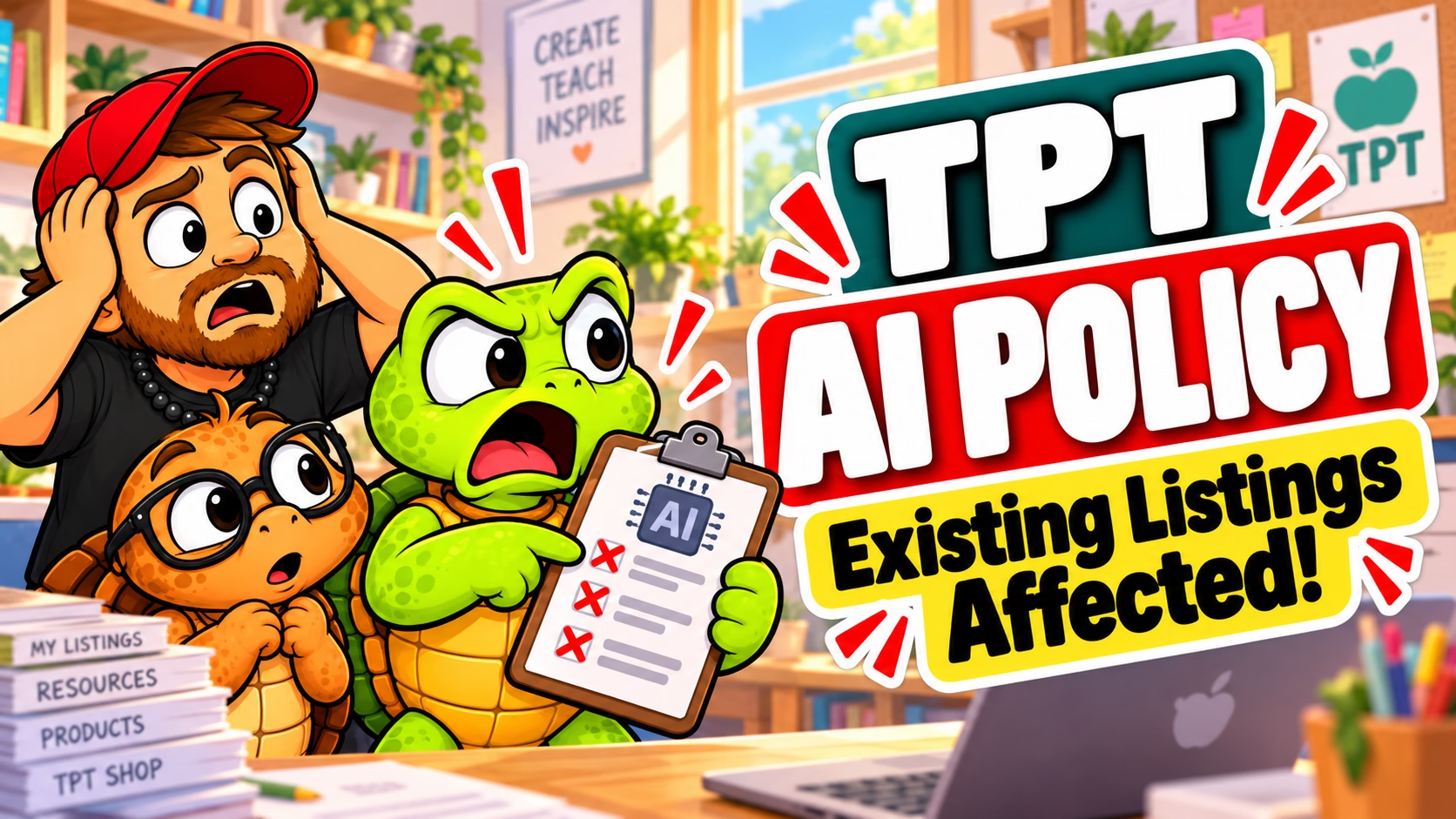
That means the new TPT AI policy isn’t just about future listings. It could affect existing worksheets, classroom activities, educational illustrations, resource previews, product thumbnails, and even listing descriptions.
TPT says it wants to protect the value of original, educator-created materials and eliminate low-effort AI content. That’s a reasonable goal. But the announcement leaves us with some serious questions. How will TPT distinguish AI-generated content from human-created work? Where will it draw the line on acceptable AI use? And how does TPT expect sellers to update hundreds or even thousands of existing resources? And if you’re a seller who has spent the last couple of years building an entire product catalog with AI-generated illustrations, I’m guessing this wasn’t the announcement you were hoping to hear on a Thursday evening.
There’s another interesting wrinkle to the new TPT AI policy, too. TPT’s own research shows that educators are increasingly using AI to create classroom materials, brainstorm ideas, and manage their workloads. So where does useful AI assistance end and prohibited AI-generated content begin? That’s one of several questions TPT hasn’t fully answered. Let’s dive in!
What Is the New TPT AI Policy for 2026?
The new TPT AI policy prohibits sellers from using generative AI to create images or text included in their educational resources and product listings. Announced during the October 8 Seller Town Hall, the policy direction also requires sellers to begin replacing AI-generated material in existing listings.
The announcement came during a Town Hall primarily focused on TPT’s new Exclusive Seller membership. I’d already covered the TPT Exclusive Seller changes and their impact on Etsy sellers, but the AI announcement introduced a separate issue that could affect a much broader group of sellers.
During the AI portion of the presentation, Fitz, a member of TPT’s Product Team, made the company’s new direction clear:

“We’re committing to keeping TPT teacher created, classroom ready, and AI free.”
He explained that TPT believes educators come to the marketplace for resources created by experienced teachers, rather than materials they could generate themselves using readily available AI tools. TPT also promised to share more detailed policy guidelines, seller instructions, and enforcement information in the coming weeks.
For now, TPT has instructed sellers to stop adding AI-generated content to their products and listings and begin reviewing previously published materials. This is an important distinction. TPT has announced its policy direction and immediate instructions, but it hasn’t yet explained exactly how it plans to implement and enforce the new rules.
What AI-Generated Content Is Banned on TPT?
TPT’s October 8 announcement restricts AI-generated images and text in both the educational products sellers deliver and the listings they use to advertise those products. The new rules apply even when AI-generated content makes up only a small portion of an otherwise original resource.
TPT specifically identified the following areas:
| Content | What TPT announced |
|---|---|
| Educational resource files | AI-generated text and images should not be used |
| Product covers | AI-generated images should not be used in new or existing covers. |
| Listing thumbnails | AI-generated content is included in the restriction |
| Resource previews | AI-generated text and images are covered |
| Product descriptions | AI-generated text should not be used |
This is significant because sellers may have used generative AI in only one part of an otherwise original resource. For example, a seller might personally develop a complete reading comprehension activity but use an AI image generator to create an illustration for the worksheet. Another seller might create an entire educational resource without AI but use ChatGPT to draft the product description. Based on TPT’s October 8 instructions concerning the new TPT AI policy, both situations raise compliance concerns, even though the educational resources themselves may involve substantial human work.
Does the TPT AI Policy Apply to Product Descriptions and Thumbnails?
Yes. TPT specifically included product descriptions, cover images, thumbnails, and previews in its announcement. This makes the policy more extensive than a restriction on AI-generated worksheets or lesson plans alone. Sellers who use AI primarily for marketing materials, rather than for creating their educational products, may also need to review their listings.
TPT still hasn’t explained where it will draw the line between prohibited AI-generated content and acceptable AI assistance. That’s especially important for sellers who use AI writing tools to organize, edit, or improve their own work.
Does the New TPT AI Policy Affect Existing Listings?
Yes. TPT explicitly instructed sellers to begin replacing AI-generated content in existing educational resources and product listings. The October 8 announcement did not provide a specific deadline for completing those changes. This may be the most consequential part of the entire announcement.
Some sellers have spent years building extensive catalogs of educational resources. Others have added AI-generated illustrations, writing, or marketing materials to their products since generative AI tools became widely available. Now, the new policy may force those sellers to revisit products they published years ago.
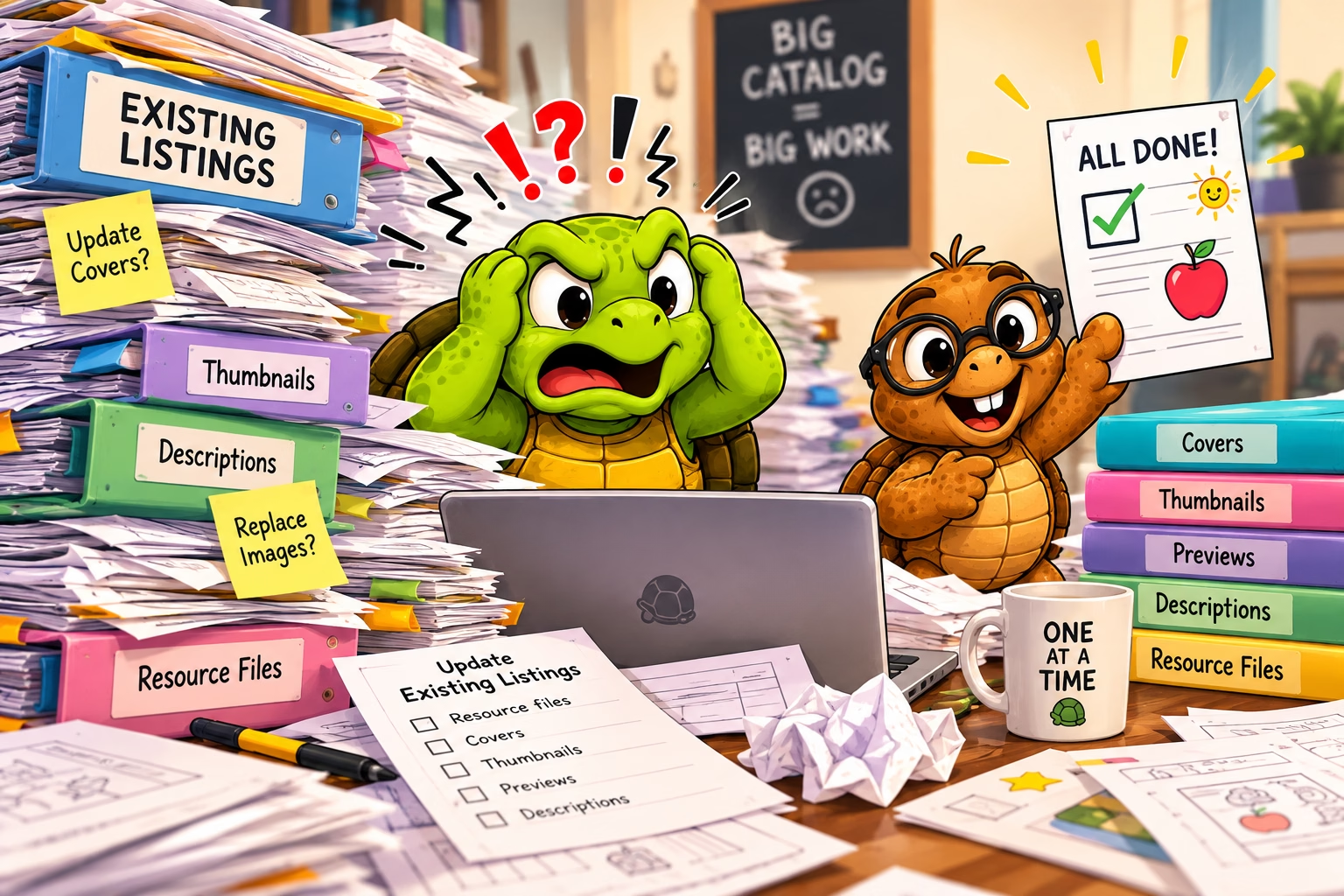
Imagine you’ve spent the last two years building a TPT shop with 500 educational products. You’ve designed the worksheets, written the instructions, and carefully organized everything. But you used AI-generated illustrations on 200 of your product covers. Now imagine opening your email on Thursday evening and discovering that you may need to replace those illustrations, redesign the covers, update your thumbnails, and possibly revise the resources themselves. And you thought keeping up with 500 listings was already enough work!
How Long Do TPT Sellers Have to Remove Existing AI Content?
TPT hasn’t announced a firm deadline for replacing AI-generated content in existing listings. During the Town Hall, the company acknowledged that sellers would need time to make changes and said it didn’t intend to unfairly penalize established stores. However, TPT made it clear that sellers should start replacing AI-generated material now rather than wait for the final guidelines.
Teachers Pay Teachers also promised more information in the coming weeks. Until then, sellers shouldn’t assume they’ll have unlimited time to make changes. But they shouldn’t assume TPT will immediately remove every affected listing, either. The company hasn’t confirmed either scenario.
Why Is TPT Banning AI-Generated Resources?

TPT says its goal is to preserve a marketplace built around original, educator-created materials and protect buyers from low-effort AI-generated products. The company believes that teacher expertise, classroom experience, and resource quality are important reasons educators purchase from TPT.
During the Town Hall, TPT described growing concerns about the availability of generative AI tools that allow teachers to create educational materials themselves. If educators can produce basic worksheets or classroom activities using free AI tools, TPT believes its marketplace needs to offer something more valuable.
That’s a legitimate business concern. After all, experienced educators bring practical knowledge that an AI model doesn’t automatically possess. They understand classroom management, student needs, developmental appropriateness, and the realities of teaching. An AI-generated worksheet might look impressive while still containing factual errors, confusing instructions, or activities that aren’t appropriate for the intended grade level. TPT wants buyers to associate its marketplace with trustworthy, classroom-ready materials created by educators.
But there’s another side to this discussion that TPT didn’t really explore during the Town Hall. And that’s where things get interesting, lol.
Is All AI-Generated Educational Content Low Quality?
No. Using AI doesn’t automatically make an educational resource low quality, just as creating a resource manually does not automatically guarantee quality. To say otherwise is foolish, in my opinion. AI can produce inaccurate or poorly designed materials. It can also produce useful content when guided, reviewed, and revised by someone who understands the subject.
Imagine two worksheets. A teacher creates the first one entirely by hand, but it contains confusing instructions, terrible formatting, and several factual errors. It reminds me of when I was in school and the woodshop teacher would end up covering history class. I’m sure he was great with a table saw, but teaching the War of 1812? Maybe not so much, lol.
For the second worksheet, an experienced teacher uses AI-generated illustrations but personally develops, reviews, and thoroughly tests the educational content.
Which is the better educational resource?
From a quality standpoint, the answer should depend on the content, its accuracy, and its usefulness in the classroom. But under TPT’s new AI policy, the second worksheet could violate the rules simply because it contains AI-generated illustrations, even though an experienced teacher created and tested the educational material.
This doesn’t mean TPT is wrong to establish standards for its marketplace. They absolutely should. But it does mean that restricting all AI-generated content and evaluating educational quality are two totally different things. And that brings us to something particularly confusing with this new AI policy: TPT’s own research.
TPT’s 2026 Survey Shows Teachers Are Embracing AI
TPT’s August 2026 research found that educators are increasingly using AI to help create teaching resources, brainstorm ideas, and complete administrative tasks. The findings suggest that many educators see AI as a useful tool, even while expressing concerns about relying on AI-generated classroom materials.
On August 24, 2026, TPT published the results of a survey involving 7,345 educators, conducted ahead of the 2026–2027 school year. According to TPT’s 2026 Back-to-School Survey, educators reported using AI for several purposes. Also important to note here, these results reflect surveyed educators, not specifically TPT sellers.
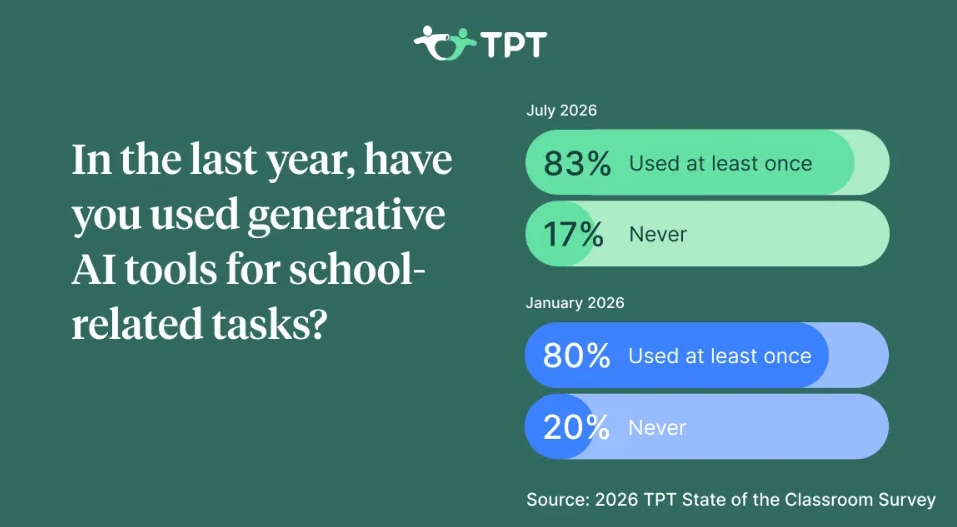
During the October 8 Town Hall, TPT also stated that 83% of teachers in its State of the Classroom research had used AI for school-related tasks. These figures don’t mean that the same percentages of TPT sellers are using AI to create products for sale. However, they demonstrate how thoroughly AI has entered educators’ everyday workflows. One thing you’ll hear me say over and over again here, as a seller, you must know your customer, right? If TPT’s own research shows that educators distinguish between AI-assisted resources and fully AI-generated materials, why wasn’t that distinction part of the conversation when announcing this policy? Why does TPT’s new policy seem to ignore what its own research tells us about its customers?
And the survey included another finding that deserves attention.
What Does TPT’s Research Say About AI-Assisted Resources?
TPT’s research found that educators overwhelmingly trusted human-created resources more than fully AI-generated materials. During the October 8 Town Hall, TPT made a similar argument about buyers preferring educator-created materials. But that same research also revealed considerably more trust in AI-assisted resources and AI-generated materials that humans reviewed or refined. TPT didn’t address that distinction during the presentation, even though it directly relates to the new policy. Context matters, especially when a company uses its own research to justify a decision that could affect thousands of existing products and the sellers who depend on them.
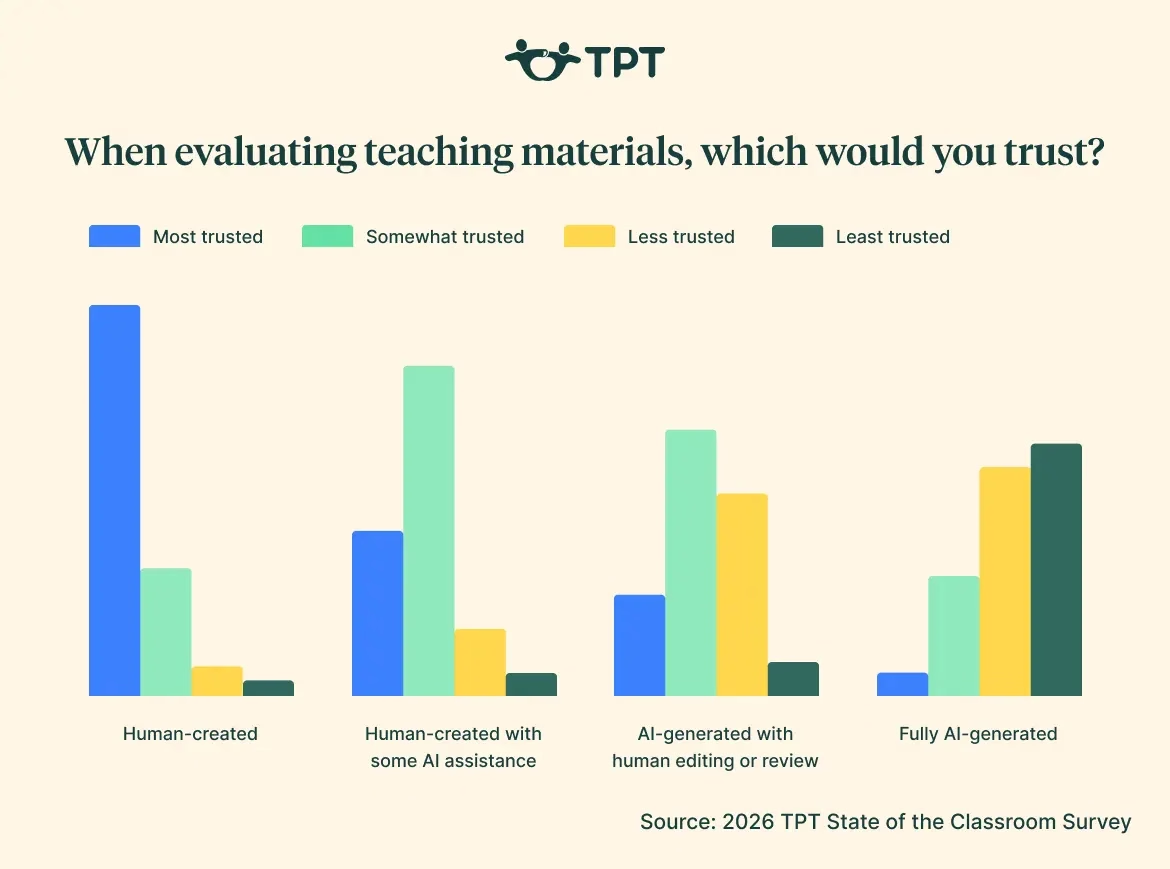
The survey doesn’t suggest that educators want AI to create every classroom resource. In fact, respondents expressed concerns about accuracy, learning outcomes, and the importance of human judgment.
But the research also shows that educators recognize the value of combining AI assistance with professional expertise. That raises an important question about TPT’s new policy. If educators trust AI-assisted materials that humans review and refine, why should TPT treat every resource containing AI-generated elements the same way? Not all AI use is the same, and it’s certainly not that cut and dry, lol. There’s a big difference between someone flooding a marketplace with hundreds of unreviewed AI worksheets and an experienced teacher using AI-generated artwork in a carefully developed classroom resource.
TPT may ultimately decide that neither belongs on its marketplace. That’s its decision to make. However, its own research suggests that educator attitudes toward AI are more nuanced than a simple choice between human-created and AI-generated materials.
How Will TPT Identify and Enforce Its New AI Policy?
TPT plans to monitor AI-generated content and introduce new reporting tools that allow users to flag low-quality AI resources. However, the company has not yet explained the specific detection methods, evidence requirements, review procedures, or penalties that will apply under the updated policy.
During the October 8 Town Hall, TPT said it had already removed hundreds of thousands of low-effort resources through its earlier marketplace quality efforts. That’s a substantial number. However, TPT didn’t specify how many of those resources contained AI-generated content, so we shouldn’t assume they were all AI-related removals.
The company also announced that users will soon have a dedicated way to report resources they believe contain low-quality AI-generated material. TPT already maintains a general resource reporting process, described in its official resource reporting guidelines. The newly announced AI-specific reporting option is an additional development. But like anything else where members are responsible, reporting suspected AI content introduces several challenges for TPT.
Can TPT Reliably Identify AI-Generated Images?
TPT has not explained how it intends to reliably distinguish AI-generated content from human-created material. And I have to admit, there’s a little irony here. Imagine TPT using AI to identify AI-generated content so it can maintain an AI-free marketplace. We’ve definitely seen this before on other platforms. I’m not saying that’s what they’re planning, because they haven’t explained their detection methods yet. But you have to admit, that would be something and wouldn’t surprise me.
Some AI-generated illustrations contain obvious errors, unnatural features, inconsistent details, or recognizable visual patterns. But let’s be honest- this is no longer 2025, when too many fingers were a dead giveaway. AI has progressed significantly. Other AI-generated images can be considerably harder to distinguish from traditional digital artwork.
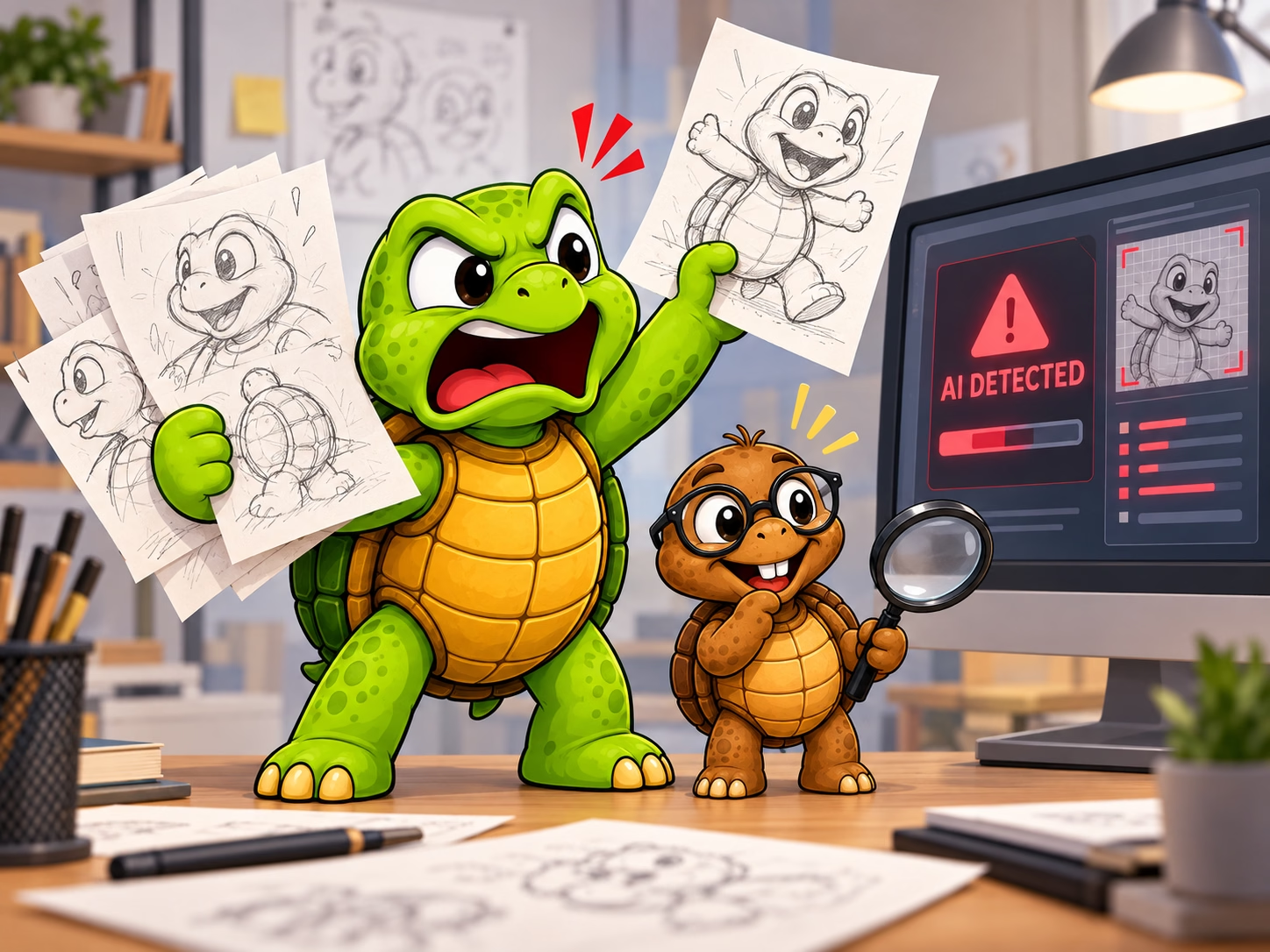
Take Sheldon and Tater Tot, for example. Someone could easily mistake their cartoon style for AI-generated artwork, even if an artist drew them entirely by hand. Would a seller have to prove how they created every illustration simply because someone thinks it looks like AI? That’s the problem with relying on appearances. Just because something looks like AI doesn’t mean AI created it.
Can TPT Reliably Identify AI-Generated Text?
TPT hasn’t explained how it will reliably identify AI-generated text, particularly when sellers have edited or rewritten portions of it themselves. A poorly written AI-generated description may be easy to suspect, but what about one that a seller carefully edits and refines? The wording alone may not reveal whether AI created the original text. And sometimes, human-written content can resemble AI-generated writing.
AI text detection tools can also produce false positives and false negatives. A detection result alone doesn’t prove that a seller violated a marketplace policy. TPT hasn’t explained whether it will use automated detection, manual reviews, seller documentation, or a combination of methods. Until it does, questions about detection accuracy and fair enforcement remain unanswered.
Could Sellers Be Falsely Reported for Using AI?
Yes, mistaken reports are a possibility, particularly when a policy relies partly on users identifying suspected AI-generated content. During the October 8 Town Hall, Fitz, a member of TPT’s Product Team, confirmed that users will soon be able to report suspected AI-generated resources.
“In the coming weeks, we’ll be adding an option to report low quality AI resources to TPT. So if you’re browsing our site and you come across something that’s clearly AI generated and reflects negatively on the marketplace, you will have a tool to report it. And we will have new tools on our end to review your reports and to act quickly. Don’t go hunting just yet. Wait for more updates from us soon.”
So we know that user reports will play a role in enforcing the new policy. But what happens when someone mistakenly reports legitimate, human-created artwork? TPT hasn’t yet explained what safeguards will be in place to protect sellers from inaccurate reports.
Imagine a seller who has spent years creating original cartoon illustrations for classroom worksheets. If those illustrations resemble the style of popular AI-generated graphics, another user might incorrectly assume they were created using AI. The possibility of mistaken reports becomes more concerning when sellers depend on their TPT income. An inaccurate report should not automatically result in a removed product, suspended account, or lost revenue.
Ideally, TPT would establish a clear review process, reasonable evidence standards, and an opportunity for sellers to respond to disputed claims. Those are recommendations, not procedures TPT has confirmed. The company said more information about monitoring and enforcement will be provided in the coming weeks.
What Are the Penalties for Violating the TPT AI Policy?

TPT has not yet announced a complete penalty structure specifically for violations of the new AI-generated content restrictions. During the Town Hall, the company emphasized that its immediate focus was on low-quality resources and that it did not intend to carelessly penalize established stores.
However, sellers shouldn’t interpret that statement as a guarantee that violations will carry no consequences. Existing TPT Seller Guidelines already require sellers to follow marketplace content rules and accurately represent their work.
Importantly, the penalties discussed earlier in the Town Hall for violating the Exclusive Seller membership terms were related to that separate membership program. Those consequences should not automatically be applied to the new AI policy. TPT still needs to clarify what will happen when a seller is found to have prohibited AI-generated material in an existing or newly published resource.
What Should TPT Sellers Do Now About AI-Generated Content?
TPT sellers should stop adding AI-generated images or text to new resources and listings, review existing products for potentially affected material, and follow TPT’s upcoming policy updates. There’s no need to panic, but ignoring the announcement would be unwise. No timeline has been set, but it’s not something I would wait on, especially if a reporting feature shows up.
Here are some practical steps sellers can take while waiting for the detailed guidelines.
Practical Steps For Sellers
- Review new products before publishing. Avoid AI-generated text and images in resource files, covers, previews, thumbnails, and descriptions.
- Audit existing listings. Identify which products contain AI-generated material and whether that material appears in the resource itself, its marketing images, or both.
- Prioritize affected listings. Sellers with large catalogs may find it helpful to begin with their best-selling products or listings with the most obvious AI-generated content.
- Keep records of original work. Where available, preserve design files, drafts, licensed artwork documentation, and other records that may help demonstrate how resources were created. TPT has not announced a documentation requirement, but keeping records is sensible.
- Avoid making assumptions about AI-assisted workflows. Until TPT explains the boundaries, don’t assume that every form of AI assistance is either permitted or prohibited.
- Watch for official announcements. TPT has promised additional guidance addressing policy details, marketplace changes, and enforcement.
Here’s something else sellers should consider. Sellers should be careful about replacing an entire resource unnecessarily when only a small portion contains AI-generated material. For example, if an otherwise original product contains one AI-generated illustration, replacing that image may be more practical than rebuilding the entire product. The goal should be to bring listings into compliance without creating more work than necessary.
What Has TPT Not Clarified About Its AI Policy?
Although TPT made its position on AI-generated content clear during the October 8 Town Hall, several important questions remain unanswered. Among the biggest concerns are how the company will distinguish AI-assisted work from AI-generated content and how sellers should handle commercially licensed artwork.
Does the TPT AI Policy Prohibit Using ChatGPT to Edit Your Own Writing?
TPT has not clarified whether using ChatGPT or another AI tool to proofread or edit human-written content violates its new AI policy. The October 8 announcement specifically restricted AI-generated text but didn’t establish where ordinary editing ends and AI-generated writing begins. There’s a meaningful difference between asking ChatGPT to identify spelling errors, having it rewrite a paragraph for clarity, and asking it to generate an entire product description from scratch.
But what happens when a seller writes a description, asks ChatGPT to improve it, and copies the revised version into a TPT listing? Is that considered AI-generated content? And how would TPT determine which portions were written by the seller and which were rewritten by AI?
These are legitimate questions because human-written and AI-generated text can overlap in the finished product. Until TPT provides clearer guidance, sellers shouldn’t assume that every form of AI editing is either prohibited or permitted.
What About AI-Generated Artwork Purchased with a Commercial License?
TPT’s announced restrictions include AI-generated images, but the company hasn’t explained how sellers should handle artwork purchased from third-party designers. For example, a seller might purchase a collection of classroom illustrations with a commercial license, only to discover later (or never even know!) that some of the images were created using AI. Does that mean the seller must replace the artwork? What if the seller didn’t know AI was involved? And how are sellers supposed to verify the origins of graphics they’ve purchased?
A commercial license gives someone certain rights to use an image, but it doesn’t automatically guarantee that the image complies with a marketplace’s content policies. TPT needs to clarify how its restrictions will apply to purchased artwork, particularly when sellers may have no practical way of determining whether an illustration was generated using AI.
TPT AI Policy 2026: Frequently Asked Questions
Is TPT Banning AI-Generated Content in 2026?
Yes. During its October 8, 2026, Town Hall, TPT announced plans for an AI-free marketplace and instructed sellers to stop using AI-generated images and text in educational resources and product listings. Additional written guidance is expected in the coming weeks.
Do TPT Sellers Have to Remove AI-Generated Content From Existing Products?
TPT has instructed sellers to begin replacing AI-generated content in existing resources and listings. The company acknowledged that these changes will take time but did not announce a specific deadline.
Can I Use ChatGPT to Write TPT Product Descriptions?
TPT specifically included AI-generated product descriptions in its new restrictions. Sellers should not use ChatGPT or similar tools to generate descriptions for their TPT listings. The company has not yet fully clarified how AI-assisted proofreading or editing will be treated.
Can I Use Canva or Kittl to Create TPT Resources?
Yes, using Canva or Kittl isn’t automatically a violation of the announced policy. TPT did not prohibit either design platform by name. The concern is whether the finished resources or listings contain AI-generated text or images. Sellers should distinguish traditional design features from generative AI tools available within these platforms.
Can Sellers Use AI to Brainstorm Ideas for TPT Products?
TPT did not prohibit AI-assisted brainstorming during the October 8 announcement. Its instructions focused on AI-generated text and images appearing in finished resources and listings, rather than simply using AI to explore ideas.
Can My TPT Account Be Suspended for Using AI?
TPT has not yet announced the complete enforcement procedures or penalties for violations of its new AI policy. Sellers were instructed to stop publishing AI-generated content and begin replacing affected material in existing listings.
Does the TPT AI Ban Apply to Basic and Exclusive Sellers?
The announcement described a marketplace-wide policy direction, not a restriction limited to Exclusive or Basic Sellers. Both Basic and Exclusive Sellers should follow TPT’s upcoming AI guidelines.
Where Can Sellers Find the Official TPT AI Policy?
TPT announced the changes during its October 8, 2026, Town Hall and said more detailed written guidance would follow. Sellers can check TPT’s Seller Guidelines and Content Guidelines for updates.
My Takeaway: TPT’s New AI Policy Raises More Questions Than It Answers
I understand why TPT wants to eliminate low-quality AI resources, and I support that goal. But not every resource created by a human is good, and not every resource involving AI is bad. What concerns me is that TPT’s own research acknowledges this distinction, yet it wasn’t discussed during the Town Hall. To me, that’s a pretty significant omission, especially when TPT is using its own research to help justify a policy that could affect so many sellers. Now sellers are being asked to revisit existing products without having the complete guidelines.
I believe TPT should focus on the quality, accuracy, and usefulness of educational resources rather than treating AI involvement itself as the problem. And until the company explains how it plans to enforce these rules fairly, I think sellers have every reason to ask questions.
What do you think? Should TPT ban AI-generated content entirely, or focus on eliminating low-quality resources regardless of how they were created? Let me know in the comments. I’d especially like to hear from sellers who may have to update existing products.
Editorial Note: The article above is based on the October 8, 2026, Town Hall event and TPT’s published guidance available on that date. The announcement describes an evolving policy, and TPT has promised additional implementation and enforcement details in the coming weeks.