
OpenAI recently held an event that discussed its ChatGPT Ads best practices. While there was a lot of useful information, parts of it felt aimed at advertisers with much bigger budgets, technical teams, and probably a few more acronyms in their vocabulary than the average small business owner. Their example for campaign structure used a $100,000 budget, which is not exactly where most of us are starting. So I wanted to break the presentation down and explain it so small business owners (like me) understand it better. These ChatGPT Ads best practices are easier to understand once you strip away the enterprise-level examples.
What Are the 5 ChatGPT Ads Best Practices OpenAI Recommends?
OpenAI’s five main recommendations are to track conversions, give campaigns enough room to learn, optimize for the result you actually want, connect a product feed if you sell a lot of products, and use ChatGPT itself to help create and manage campaigns. That sounds simple enough until somebody starts talking about pixels, APIs, conversion signals, and campaign budgets. It starts sounding more like a Super Bowl commercial than a small business ad. Then the average small business owner starts looking around for the nearest exit, lol.
I watched OpenAI’s September 24 ChatGPT Ads presentation and went through the full transcript afterward. The presentation had a lot of useful information, but could be intimidating. It was clearly aimed at advertisers with bigger budgets, technical teams, and people who say things like “conversion API” before breakfast. So this is the small-business version. I’m not going to walk you through every setup screen or pretend you need an engineer sitting beside you. Instead, I’m breaking down what OpenAI recommended and what it means if you’re running a small business by yourself.
If you’re brand new to the idea of ChatGPT Ads, start with my guide on ChatGPT Ads for small businesses. This article picks up where that one leaves off and focuses on how OpenAI says campaigns should be approached.
Why Does Conversion Tracking Matter?

Because ChatGPT Ads needs to know what happened after someone saw or clicked your ad. Conversion tracking is the backbone of ChatGPT Ads best practices. If the goal is a sale, lead, or signup, the system needs to connect ad activity to that result. That way, it can measure performance and learn what’s working. Say Sheldon is running a ChatGPT Ad for a turtle-themed T-shirt that says “Shell Yeah, I Need a Nap.” Someone sees the ad, clicks over to his shop, and buys the shirt. Conversion tracking is what helps ChatGPT connect that sale back to the ad. Without that connection, the system knows the ad got attention, but it doesn’t know whether it helped make Sheldon money. OpenAI recommends using its Pixel and Conversions API together.
What Does the ChatGPT Ads Pixel Do?
The ChatGPT Ads Pixel helps track what people do on your website after interacting with an ad. It’s a small piece of code added to your site that reports page views, signups, add-to-cart activity, and purchases. Using the T-shirt example, a Pixel helps show that someone clicked the ad, visited Sheldon’s site, and completed a purchase. That gives ChatGPT Ads a much clearer picture of whether the ad actually led to a business result. You don’t need to understand the code itself to understand the purpose. The Pixel is just a tool ChatGPT Ads uses to connect activity on your website with the ad that sent the visitor there.
What Does the ChatGPT Conversions API Do?
The ChatGPT Conversions API sends conversion information from your website or backend directly to ChatGPT Ads. Instead of relying on what happens inside a visitor’s browser, it gives the system another way to receive important events. This can include purchases, leads, and signups.
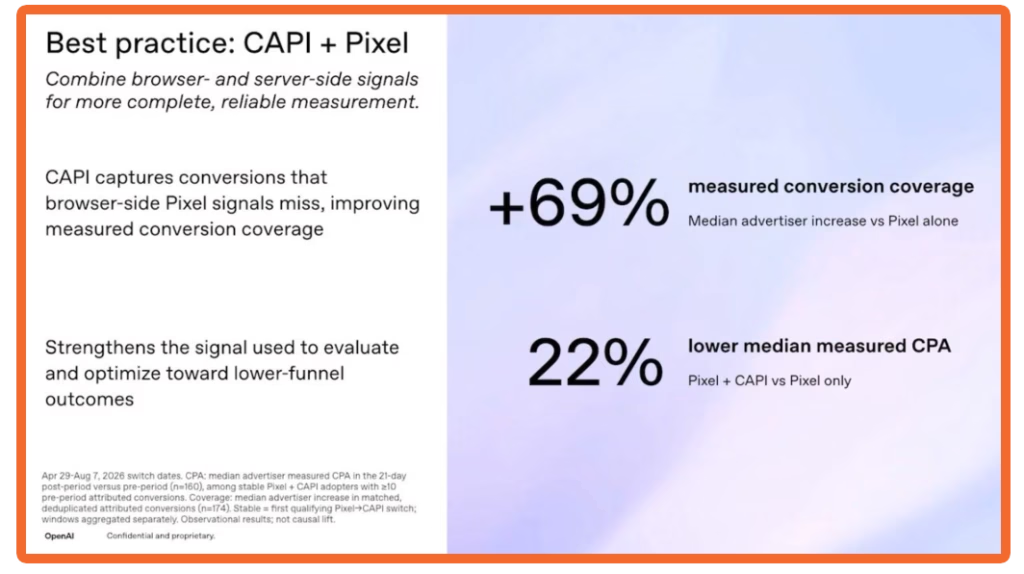
Simply, the Pixel tracks activity from the browser side, while the Conversions API sends business results from the server side. OpenAI recommends using the two together. That can give the system a more complete picture of what is happening after someone interacts with an ad. During the presentation, OpenAI said advertisers using Pixel and CAPI together saw about a 69% median increase in measured conversion coverage and a 22% lower median measured cost per acquisition compared with Pixel alone.
Do Small Businesses Need to Set Up Both the Pixel and Conversions API?
Not necessarily on day one, especially if you’re still learning the platform. The bigger takeaway is that ChatGPT Ads needs reliable conversion data if you want it to understand whether your ads are creating solid business results. If you eventually start spending real money on ChatGPT Ads, that’s when accurate conversion tracking becomes much more important. But you don’t have to become a developer tonight just to understand the strategy behind it.
OpenAI has a full conversion measurement guide explaining the Pixel, Conversions API, and how the two can work together. To avoid squeezing a coding lesson into this article, I suggest checking out the guide.
How Much Should a Small Business Spend on ChatGPT Ads?
The real lesson isn’t “spend big.” It’s “don’t spread a small budget too thin.” OpenAI recommends fewer, better-funded campaigns so each campaign has enough budget and time to learn. During the webinar, OpenAI used an example of splitting a $100,000 budget between two campaigns instead of ten. I don’t know about you, but if I had a spare $100,000 ad budget, I would probably have somebody else writing this article while I sat by the pond, lol, but you get the point.

For the little guy, the principle is the same. If you only have enough money to properly test one campaign, then run one campaign. Creating five campaigns just because the button exists doesn’t magically give you five times the results. If I wanted to properly test one campaign for Sheldon’s “Shell Yeah, I Need a Nap” shirt, I would rather give that one campaign enough room to learn than split the same money across five different campaigns. Sheldon has enough problems already. He’s better off taking the nap, lol.
OpenAI’s current campaign documentation lists a minimum daily budget of $25 USD for U.S. accounts. That’s a much more useful number for a small business owner than the six-figure webinar example. But even then, I would treat it as a test budget, not a guarantee that $25 a day is going to turn into a money printer.
You can check OpenAI’s current ChatGPT Ads campaign guidance because budgets, availability, and beta features can change.
What Should You Optimize an Ads Campaign For?
Optimize for the business result you actually care about. OpenAI currently lets advertisers build campaigns around visibility, clicks, or conversions. The presentation strongly pushed advertisers toward conversion-focused campaigns when sales or leads are the real goal. That sounds obvious, but it’s easy to get distracted by the wrong numbers. A campaign can get clicks and still be terrible for your business. If I’m advertising Sheldon’s “Shell Yeah, I Need a Nap” shirt, I don’t really care if a bunch of people click because they think he looks funny. I care whether some of those people actually buy the shirt. In that case, purchases matter a whole lot more than bragging about a flashy click-through rate.
OpenAI also explained why it recommends conversion optimization that can learn from both clicks and eligible ad views. In its webinar data, 52.7% of eligible one-day view-through conversions happened within the first hour after the matched impression. In plain talk, that means people may see an ad, not click right away, but still come back and buy later. That doesn’t mean every sale should be credited to an ad somebody happened to glance at. It means attribution is messy, lol. ChatGPT Ads is trying to learn from more than the simplest “clicked ad, bought product” path.
Do Small Sellers Need a Product Feed for ChatGPT Ads?
Not necessarily. Product feeds make the most sense when you have a larger or frequently changing catalog. They let ChatGPT Ads pull product information from your catalog instead of forcing you to build a separate ad for every item. This was one of the more interesting ecommerce parts of the presentation. OpenAI showed product feeds being used to keep prices and product details current, create product-specific ads at scale, and connect products with shoppers based on purchase intent.
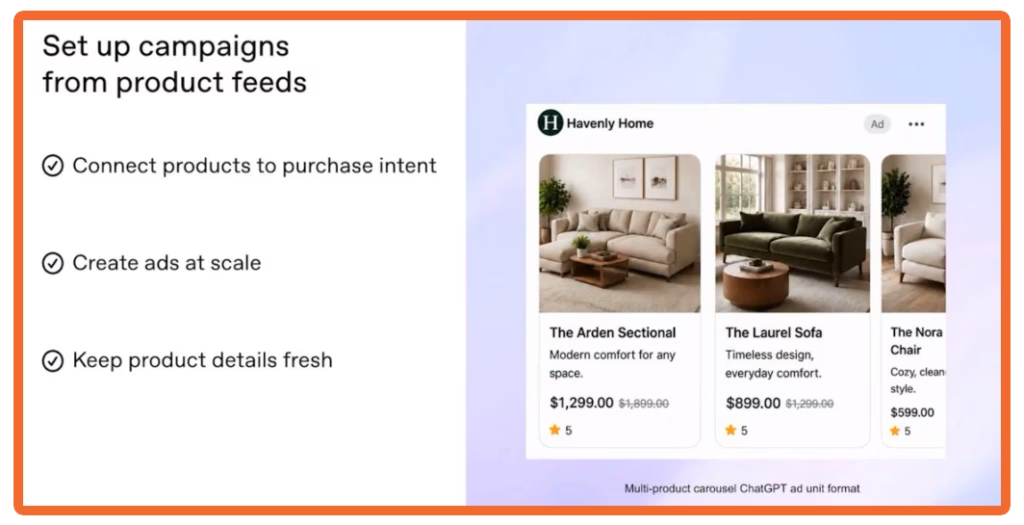
OpenAI also said active product-feed campaigns in its eligible advertiser cohorts were associated with about a 74% higher observed click-through rate than campaigns without product-feed ads. That’s an OpenAI-reported association from its own advertiser data, not a promise that uploading a spreadsheet will suddenly make your sales jump 74%.
If you only sell a handful of products, I wouldn’t lose sleep over this feature yet. For a store with dozens, hundreds, or thousands of SKUs, though, a product feed could save a ridiculous amount of manual work. OpenAI showed support for CSV uploads, hosted URLs, and SFTP connections, so there are several ways to feed product data into Ads Manager.
How Does Shopify Work With ChatGPT Ads?
If you use Shopify, OpenAI showed a much simpler way to connect your store to ChatGPT Ads. During the presentation, it demonstrated a ChatGPT Ads app for Shopify that can connect your Shopify catalog directly to Ads Manager. Once connected, your Shopify products can be pulled into a product feed and kept updated as you make changes in your store. That can be a real game-changer for Shopify owners. OpenAI also showed Shopify conversion events, including add-to-cart activity and purchases, appearing inside Ads Manager so campaigns can optimize around those actions.
For a small ecommerce business, that’s probably much more appealing than manually maintaining a feed. Basically, it lets you connect the store, sync the products, and let the two systems keep talking to each other. That sounds way better than introducing SFTP into your morning routine, lol.
Do Small Ecommerce Sellers Need to Worry About Product Feeds Yet?
Probably not if you only have a small catalog. The main benefit of product feeds is scale. They become much more useful when you have enough products, variations, price changes, or inventory updates that creating and maintaining ads one by one starts becoming a pain.
OpenAI has a dedicated product-feed campaign guide for anyone ready to tackle the setup side. For most smaller sellers, though, the bigger takeaway is that if your catalog starts getting big enough that manual ad creation becomes ridiculous, product feeds make that job easier.
Can ChatGPT Actually Help Create and Manage ChatGPT Ads?
Yes. This may be the most useful small-business feature OpenAI showed. ChatGPT Ads Manager can work inside ChatGPT so an advertiser can use normal language to create campaign drafts, review performance, and ask for recommendations. In the demo, ChatGPT looked at a fictional company’s website, suggested ad copy and an image, showed the proposed campaign structure, and then let the advertiser approve the setup before anything was created. Later, they asked how the ads were performing, and ChatGPT pulled the campaign data, compared ads, and suggested possible changes.
That’s the part that makes this platform feel different from simply dropping another ad dashboard in front of a business owner and saying, “Good luck.” OpenAI is clearly trying to make the AI part of the actual campaign workflow instead of using AI as a shiny label on top of a regular ad platform.
But there’s still an important catch here to be aware of. AI can make suggestions, but you are responsible for checking them. OpenAI repeatedly emphasized during the demo that the advertiser stays in control. I would take that seriously. “ChatGPT told me to do it” is probably not the business strategy we want engraved on our tombstone. This is why every thread in ChatGPT has the notice at the bottom. ChatGPT can make mistakes, lol.
And if you use ChatGPT heavily enough that your Library starts looking like the digital version of a junk drawer, I also have a guide on how to delete files from the ChatGPT Library. That is not an ad strategy, but future-you may appreciate it after a few months of screenshots, reports and campaign files.
Can Any Small Business Advertise in ChatGPT Right Now?
No. Availability, business verification and ad policies still matter. Ads Manager is still in beta, access depends on the advertiser’s country, and some industries face additional review or are not supported. OpenAI currently offers self-service Ads Manager in a growing list of countries, including the United States. It also verifies advertiser identity and checks whether the products or services fit its advertising policies. The supported categories and rules can change as the beta expands, so this is one area where I would always check the current information instead of relying on an article written months ago.
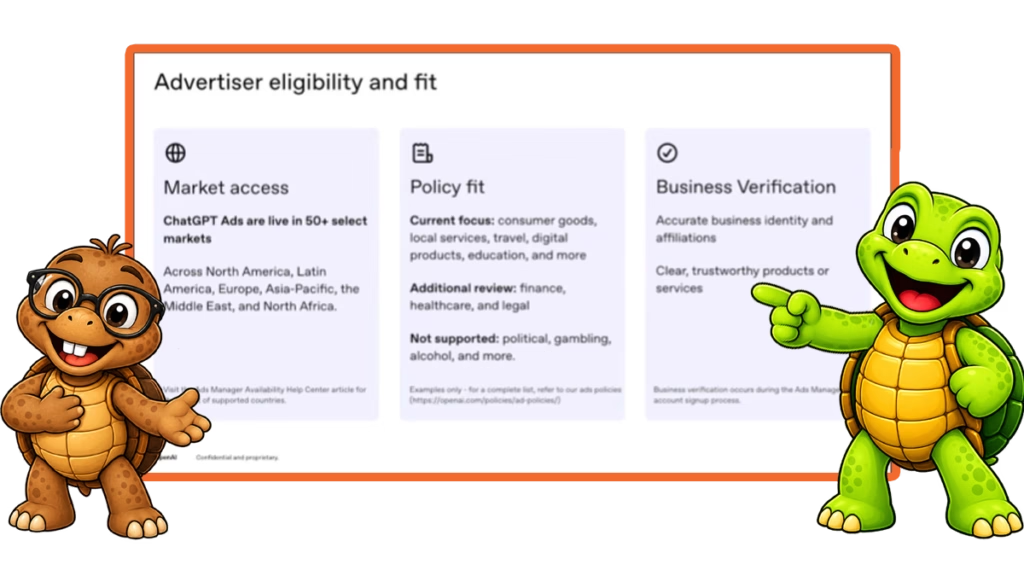
Before spending time planning a campaign, check the current Ads Manager availability and OpenAI ad policies. If you’re eligible and want to see the current signup offer, the official starting point is ads.openai.com. At the time of writing this, OpenAI is advertising a limited-time $500 ad credit after $500 in qualifying spend for eligible new advertisers, so check the current terms rather than assuming that promotion will still be there later.
What Should a Small Business Do with These ChatGPT Ads Best Practices?
For small businesses, these ChatGPT Ads best practices really come down to keeping things simple and measurable. Start by understanding the principles, not by trying to copy the enterprise-level setup from the webinar. Know what result you want, make sure you can measure it, avoid splitting a small budget into too many pieces, and only add the more advanced tools when they solve a real problem for your business.
That’s really the underlying thread running through all five recommendations. The presentation made parts of ChatGPT Ads look more complicated than they need to sound for a solo business owner, but the underlying advice is pretty normal. Measure what matters, give the system enough data to learn, and don’t create complexity just because the platform gives you the option.
ChatGPT Ads Best Practices FAQ
Are ChatGPT Ads worth it for a small business?
It is too early to say they are worth it for every small business. OpenAI has shared promising early advertiser results, but those examples don’t guarantee what a smaller advertiser will see. I would treat ChatGPT Ads as a testable new channel, not a replacement for everything already working for you.
How much do ChatGPT Ads cost?
Cost depends on the campaign objective, bidding, and competition. OpenAI currently lists a $25 USD minimum daily campaign budget for U.S. accounts. Some campaign types use cost-per-click pricing while others use impression-based pricing, so there is not one universal price for a ChatGPT ad.
Do I need the OpenAI Pixel and Conversions API?
You need conversion measurement if you want the platform to understand outcomes such as purchases, leads, or signups. OpenAI recommends using the Pixel and Conversions API together for stronger measurement, but the technical setup may be more than some small businesses want to tackle immediately. Use OpenAI’s current documentation or qualified technical help when you’re ready.
Do I need a product feed to run ChatGPT Ads?
No. Product feeds are most useful for retailers with larger or frequently changing catalogs. Standard campaigns can still be created without one.
Can ChatGPT create my ads for me?
ChatGPT can help create campaign drafts, ad ideas, and performance recommendations, but you still review and approve what gets used. That human review is important, especially when AI-generated copy or recommendations affect real advertising spend.
Where do I sign up for ChatGPT Ads?
The official sign-up page is ads.openai.com. Availability is still expanding, so check whether self-service Ads Manager is available for your business location before planning around it.
Do I Need a Paid ChatGPT Account to Use ChatGPT Ads?
No. You do not need a paid ChatGPT plan just to advertise on ChatGPT. What you do need is an eligible business advertiser account, access to Ads Manager in a supported market, and billing set up before your ads can actually run.
My Final Takeaway
The five ChatGPT Ads best practices OpenAI shared are useful even if its presentation sometimes sounded like it was talking to companies with a floor full of marketers and engineers. For a small business, the translation is much simpler. Track the result you care about, keep your campaigns focused, give them enough time and budget to learn, use product feeds only when they make your life easier, and let ChatGPT help without handing it the steering wheel.
I am interested in testing these ChatGPT Ads best practices because small businesses are getting access to an entirely new advertising channel while it’s still being built. That doesn’t mean I’m rushing out to dump money into it tomorrow. Once I actually test it, I’m sure I’ll create an article with a walkthrough and what I discover- but I’m not there yet, lol. I do think this is the ideal time to study how it works, watch what early advertisers learn, and be ready to test it intelligently when it makes sense for my business. And if your advertising budget is $100,000, congratulations! Can’t wait until I get there, lol.